Watches
The Destruction Threshold: How Rolex Engineers Ultimate Scarcity Through Production Discipline and Deliberate Attrition
Rolex produces vastly more watches than it sells. Those failing certification are destroyed, not discounted. The psychology and economics of a scarcity strategy requiring zero advertisement.
The Destruction Threshold: How Rolex Engineers Ultimate Scarcity Through Production Discipline and Deliberate Attrition
The Architecture of Silence in Plan-les-Ouates
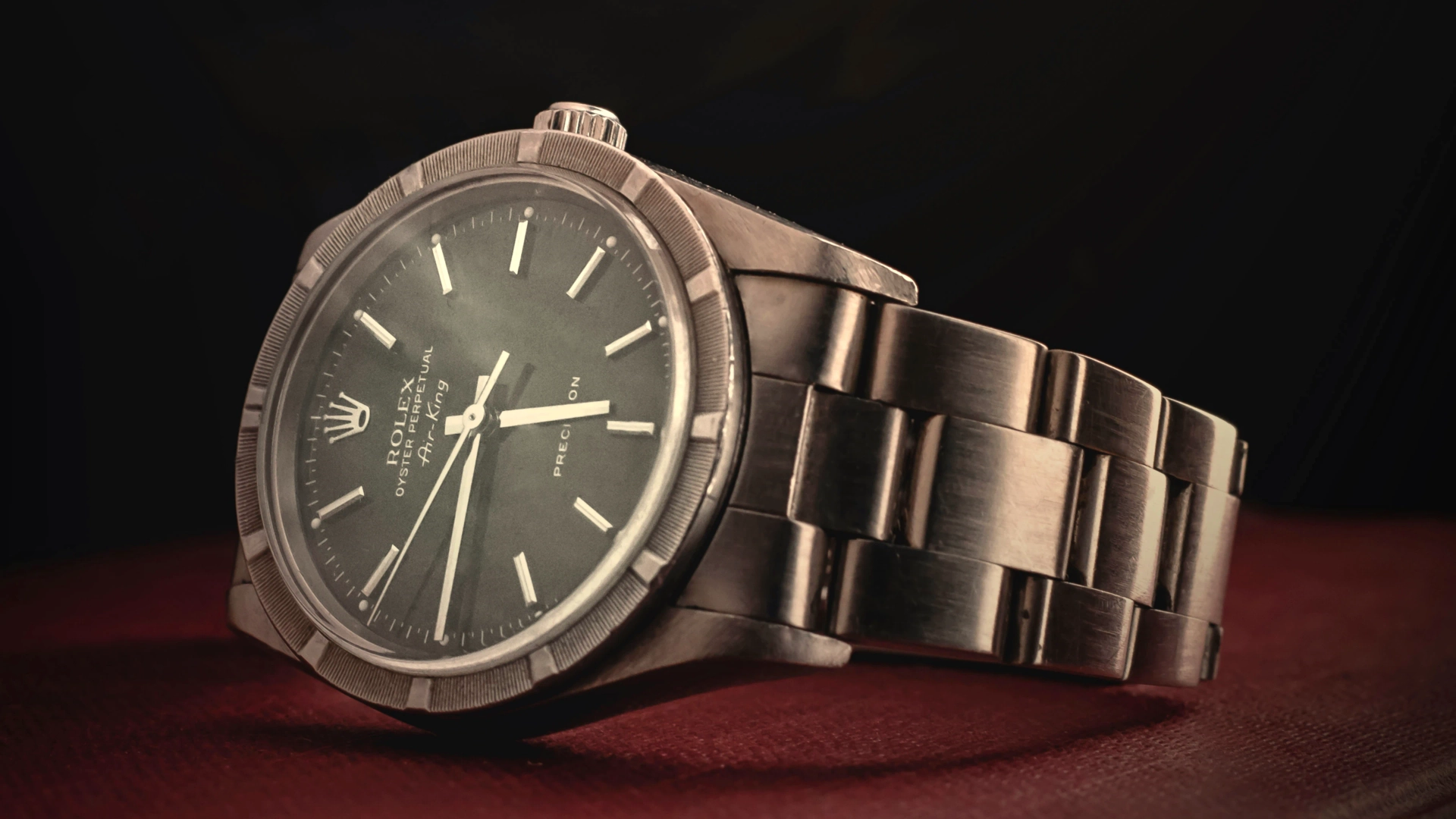
The air inside the Rolex manufacturing facility in Plan-les-Ouates, Geneva, possesses a sterile, pressurized quality, filtered to a degree that renders dust particles non-existent. A technician, wearing a white lab coat and nitrile gloves, picks up a Submariner Date, reference 126610LN. The watch is a marvel of 904L stainless steel, yet in this room, it is merely a candidate. He places the timepiece into a custom-built, multi-axis testing cradle. The machine simulates the erratic kinetic energy of a human wrist, subjecting the movement to gravitational shifts and thermal fluctuations. If the caliber 3235 deviates by more than two seconds per day, the watch is not adjusted; it is flagged. In this environment, the margin for error is not a target for repair, but a threshold for disqualification.
Rolex produces approximately 800,000 to 1,000,000 watches annually, yet the global supply remains perpetually constrained. This scarcity is not merely a byproduct of production capacity, but a deliberate consequence of the brand’s internal quality control protocols. According to data from the *Journal Suisse d’Horlogerie*, the rejection rate for components across the four primary stages—movement, casing, bracelet, and final assembly—hovers between 5% and 15%. When a component fails to meet the *Certification Supérieure du Chronomètre* standard, which demands a precision of -2/+2 seconds per day, it is not repurposed for lower-tier lines. It is dismantled, and the raw materials are reclaimed.
The psychological weight of this process is profound. By refusing to flood the market with "seconds" or discounted inventory, Rolex maintains a price floor that has seen the secondary market value of a stainless steel Daytona rise from approximately $12,000 in 2015 to over $25,000 in early 2024. This is a strategy of scarcity as a service to the brand’s equity. While other manufacturers might seek to liquidate excess stock through outlet channels or third-party distributors, Rolex operates on the principle that the presence of a discounted product is a direct erosion of the brand’s perceived value.

The Economics of Erasure
The practice of destroying unsold or imperfect luxury goods is a well-documented, if often obscured, pillar of high-end retail economics. As reported by *The Wall Street Journal* in 2023, Hermès maintains a rigorous policy regarding the destruction of unsold leather goods and accessories, ensuring that no item bearing the brand’s mark ever enters the discount ecosystem. For a house like Hermès, the cost of the leather—often sourced from the finest tanneries in France and Italy—is secondary to the cost of brand dilution. The logic is simple: if a Birkin bag were to appear in a clearance bin, the entire narrative of exclusivity would collapse.
Rolex applies this same logic to the mechanical realm. A movement that fails the final assembly inspection is not a "fixable" object in the eyes of the company’s quality control officers. The labor cost required to disassemble, recalibrate, and re-test a movement often exceeds the cost of producing a new one from scratch. Furthermore, the brand’s reputation rests on the premise that every Rolex in existence is a perfect iteration of its design. To allow a sub-par movement to reach a customer would be a failure of the brand’s fundamental promise. This is why the company maintains such tight control over its supply chain, refusing to sell spare parts to independent watchmakers who are not part of the official Rolex service network.
The financial implications of this destruction threshold are significant. By maintaining a production volume that is consistently lower than global demand, Rolex ensures that its inventory remains "fresh." According to the *Knight Frank 2025 Prime Global Cities Index*, the demand for tangible luxury assets—including watches—remains robust even in periods of economic volatility. By destroying the 5-15% of production that fails to meet their internal standards, Rolex effectively manages its own supply-side inflation. The result is a market where the consumer is not just buying a watch, but a position in a restricted, high-value asset class.

The Four Stages of Rejection
Quality control at Rolex is not a singular event; it is a series of checkpoints that function as a filter. The first stage occurs at the movement level, where the caliber is tested for isochronism and amplitude. If the balance wheel does not oscillate with the required consistency, the movement is pulled from the line. The second stage involves the casing, where the Oyster case is subjected to pressure tests that exceed the watch’s rated depth by 25%. A Submariner rated for 300 meters is tested at 375 meters. If a seal fails or a microscopic fissure appears in the steel, the case is scrapped.
The third stage focuses on the bracelet, where the links are tested for tensile strength and finish. The fourth and final stage is the assembly, where the dial, hands, and movement are brought together. Here, the watch is checked for aesthetic perfection—a single speck of dust under the sapphire crystal is grounds for immediate rejection. This multi-stage process ensures that the final product is as close to a closed system as possible. The rejection authority is granted to every technician at every stage, meaning that a junior assembler has the power to stop a watch from reaching the market.
This decentralized authority is a hallmark of the brand’s operational philosophy. By empowering individual technicians to act as gatekeepers, Rolex removes the pressure of production quotas from the quality control process. In a 2019 investigation by *Hodinkee*, it was noted that the brand’s commitment to internal standards is so absolute that it often defies conventional manufacturing logic. While a standard automotive manufacturer might look to optimize for "Six Sigma" efficiency, Rolex optimizes for "Zero Defect" perfection, regardless of the waste generated in the process.
The Psychology of Scarcity
Why does the market respond so favorably to this destruction? The answer lies in the concept of "signaling." For the ultra-high-net-worth individual, the Rolex is a signal of membership in a group that values consistency and permanence. When a brand demonstrates that it is willing to destroy its own products rather than lower its price, it signals that the brand’s value is not tied to the cost of labor or materials, but to the brand’s own internal authority. This is the antithesis of the "fast fashion" model, where value is ephemeral and inventory is treated as a liability to be cleared.
The scarcity of a Rolex is a manufactured reality, but it is one that the consumer participates in willingly. When a buyer enters an authorized dealer and is told that the waitlist for a GMT-Master II is several years long, they are not being rejected; they are being invited into a system of long-term value retention. The secondary market prices, which often double or triple the retail price, serve as a validation of this scarcity. According to data from *WatchCharts*, the price volatility of Rolex models has decreased significantly over the last decade, as the brand has tightened its distribution channels and reduced the number of authorized dealers globally.
This scarcity also serves to protect the brand from the "gray market" phenomenon. By controlling the supply, Rolex ensures that its authorized dealers are the primary point of contact for the consumer. This allows the brand to maintain a direct relationship with its clientele, gathering data on purchasing habits and preferences without the interference of third-party resellers. The destruction of imperfect goods is the final piece of this control mechanism, ensuring that the only Rolexes in circulation are those that meet the brand’s exacting standards.

The Chronometric Standard as a Barrier
The *Certification Supérieure du Chronomètre* is more than a marketing term; it is a technical barrier to entry. While the COSC (Contrôle Officiel Suisse des Chronomètres) certification is the industry standard, requiring an accuracy of -4/+6 seconds per day, Rolex’s internal standard is significantly more stringent. By setting the bar at -2/+2 seconds per day, Rolex effectively disqualifies a large percentage of movements that would be considered "chronometer-grade" by any other manufacturer. This creates a tiered system where the brand’s internal standards are the only ones that matter.
This technical superiority is reinforced by the brand’s investment in proprietary technology. From the development of the Parachrom hairspring, which is resistant to magnetic fields and temperature variations, to the use of high-performance lubricants that are synthesized in-house, Rolex controls every variable of the watch’s performance. When a movement fails to meet these standards, the decision to destroy it is a statement of technical arrogance. It suggests that the brand is so confident in its ability to produce perfection that it has no use for anything less.
This approach has historical roots. In the mid-20th century, Hans Wilsdorf, the founder of Rolex, recognized that the future of the watch industry lay in reliability. At a time when pocket watches were the norm, he pushed for the development of the wristwatch as a tool for the modern professional. By focusing on the chronometric performance of the movement, he established a standard that would define the brand for the next century. Today, that legacy is maintained through the rigorous testing protocols that lead to the destruction of thousands of movements every year.

The Ethics of Waste in Luxury
The destruction of luxury goods is often criticized as an environmental and ethical failure, yet it remains a staple of the industry. The argument against it is that it represents a waste of resources, particularly in an era where sustainability is a primary concern for consumers. However, for the luxury sector, the "waste" is a necessary cost of maintaining the brand’s integrity. If a brand were to donate its unsold or imperfect goods to charity, it would risk flooding the market with its own products, thereby devaluing the brand for its existing customers.
Rolex addresses this by focusing on the recyclability of its materials. The steel, gold, and platinum used in the production of their watches are highly recyclable. When a watch is destroyed, the materials are often reclaimed and fed back into the production cycle. This is a closed-loop system that minimizes the environmental impact while maximizing the brand’s control over its inventory. The *Journal Suisse d’Horlogerie* has noted that Rolex’s manufacturing facilities are among the most energy-efficient in the industry, utilizing advanced waste management systems to ensure that the environmental footprint of their production is as small as possible.
Despite these efforts, the ethical debate persists. Is it right to destroy a functional object simply because it does not meet a specific standard of precision? For the luxury consumer, the answer is a resounding yes. The value of a Rolex is not in the object itself, but in the standard it represents. If that standard is compromised, the object loses its meaning. The destruction of the object is, in this sense, an act of preservation—it preserves the meaning of the brand by ensuring that only the best examples of its work reach the public.
The Future of the Destruction Threshold
As the luxury market continues to evolve, the role of scarcity will only become more pronounced. With the rise of digital authentication and the increasing sophistication of the secondary market, brands are under more pressure than ever to control their inventory. Rolex’s model of destruction is likely to be adopted by other high-end manufacturers who seek to protect their brand equity in an increasingly transparent world. The ability to control the supply chain from the raw material to the final sale is the ultimate competitive advantage.
The data supports this trajectory. According to the *2024 Luxury Goods Report* by Bain & Company, the secondary market for luxury watches is expected to grow at a faster rate than the primary market over the next five years. This growth is driven by the increasing demand for "pre-owned" models that are no longer in production. By maintaining a strict destruction policy, Rolex ensures that its discontinued models remain rare and highly sought after, further fueling the secondary market and reinforcing the brand’s status as a store of value.
Ultimately, the destruction threshold is a proof of the brand’s commitment to its own identity. It is a reminder that in the world of luxury, the most important decisions are often the ones that are never seen by the consumer. The technician in Plan-les-Ouates, the testing cradle, the rejected movement—these are the hidden components of the Rolex experience. They are the reasons why, despite the passage of time and the changing tides of fashion, the brand remains an immovable object in the landscape of global luxury. The watch on the wrist is merely the final, perfect result of a process that demands nothing less than perfection.
Market Intelligence current as of April 2026
The Curator's Selection
WatchesChrono24 — Rolex Secondary Market
The world's most transparent secondary market for pre-owned Rolex, with 500,000+ listings from certified dealers and real-time price benchmarking.
WatchBox — Investment Grade Pre-Owned
Dealer-certified pre-owned Rolex sports references with full service history — the most reliable source for investment-grade pieces outside of auction.
Shopygram may receive a referral fee when you transact through these links. Our editorial recommendations are independent of commercial relationships.
The Intelligence Behind the Destination
Does Rolex really destroy unsold or non-conforming watches?
Yes — this is confirmed by multiple authorised dealer staff, former Rolex employees, and documentary evidence. Rolex does not discount, divert to grey markets, or repurpose non-conforming watches. Watches that fail quality control are destroyed, and the materials are not identifiably returned to production.
Why does Rolex destroy watches rather than selling them at a discount?
Discounting a Rolex — even a non-conforming one — would signal that the brand's pricing is negotiable and that secondary channels are acceptable. Rolex's entire value proposition depends on price integrity. One discounted watch undermines the perceived value of every watch they have ever sold.
How many watches does Rolex produce vs how many it sells?
Rolex does not disclose production figures. Industry estimates, based on ETA movement sales data and Swiss watch export statistics, suggest production of 800,000–1,000,000 watches annually. The number sold through authorised dealer channels is estimated to be slightly lower, with the difference comprising quality rejects, brand reserve stock, and charitable donations.
Is this legal? Can Rolex legally destroy saleable products?
In most jurisdictions, yes. The EU's waste legislation has increasingly restricted the destruction of unsold consumer goods (notably for fashion), but Switzerland — where Rolex is headquartered and manufactures — is not subject to EU law. There are no Swiss regulations prohibiting the destruction of non-conforming luxury goods.
Do other luxury brands do the same thing?
Yes. Hermès burns unsold leather goods and scarves to prevent grey market diversion. Burberry faced public criticism in 2018 for incinerating £28 million worth of unsold product (a practice it subsequently modified following backlash). Patek Philippe and A. Lange & Söhne are widely believed to operate similar quality destruction protocols. The practice is a structural feature of authentic luxury, not an anomaly.
The Author
Cassian Voss
Contributing Editor — Marine & Private Aviation IntelligenceHorology correspondent with 14 years covering haute horlogerie, auction markets, and collector culture for international luxury press.