Intelligence
The Total Cost of Sky Ownership: Uncovering the Operational Obligations That the Purchase Price of a Jet Conceals
Management fees, crew retention, hangarage, and fuel reserves—the annual commitment that turns an aviation asset into a multi-million-dollar operational liability.
The Total Cost of Sky Ownership: Uncovering the Operational Obligations That the Purchase Price of a Jet Conceals
The Calculus of Altitude: Deconstructing the Economics of Private Aviation
The decision to acquire a private aircraft is rarely a matter of simple arithmetic; it is an exercise in the management of temporal scarcity. For the ultra-high-net-worth individual, the aircraft is a mobile boardroom, a sanctuary of silence, and a tool for the compression of geography. Yet, the transition from charter client to principal owner introduces a complex fiscal architecture that often escapes the casual observer. According to the 2024 Knight Frank Wealth Report, the global population of ultra-high-net-worth individuals—those with a net worth exceeding $30 million—has expanded by 4.2% over the past twelve months, driving a concurrent surge in demand for bespoke aviation solutions. However, the transition from the convenience of a NetJets card to the liabilities of a Part 91 or Part 135 operation requires a cold-eyed assessment of depreciation, regulatory compliance, and the relentless burn rate of operational overhead.
The Gulfstream G650ER: The Benchmark of Long-Range Utility
The Gulfstream G650ER remains the industry’s most recognizable silhouette, a machine defined by its 7,500-nautical-mile range and its ability to connect New York to Hong Kong with a single stop. Acquiring a factory-new G650ER currently commands a capital outlay of approximately $65 million. In the pre-owned market, a 2020 vintage airframe—often with fewer than 1,500 flight hours—typically trades between $38 million and $42 million, depending on the pedigree of the maintenance logs and the configuration of the cabin interior.
The annual fixed costs for a G650ER are substantial. A dedicated flight crew of two pilots, factoring in competitive salaries, benefits, and recurrent training at facilities like FlightSafety International, commands between $350,000 and $500,000 annually. When one adds the oversight of a management firm—such as Gama Aviation, ExecuJet, or Jet Aviation—to handle the complexities of Part 135 compliance, scheduling, and pilot scheduling, the owner incurs an additional $200,000 to $300,000 in management fees. Insurance premiums, which have hardened significantly since 2022 due to global geopolitical volatility, now range from $350,000 to $500,000 per year. Hangarage, a variable dictated by the scarcity of space at hubs like Teterboro (TEB) or Van Nuys (VNY), adds between $60,000 and $180,000.

The variable costs are where the G650ER truly tests the owner’s resolve. For an annual utilization of 300 flight hours, fuel consumption alone—factoring in current Jet-A pricing and the aircraft’s Rolls-Royce BR725 engines—ranges from $1.2 million to $1.8 million. When coupled with a mandatory maintenance reserve of $800,000 to $1.2 million to account for engine overhauls and airframe inspections, the total annual cost of ownership for a G650ER sits between $2.96 million and $4.48 million.
The Bombardier Global 7500: Engineering the Ultra-Long Haul
Bombardier’s Global 7500 has redefined the interior experience, offering a four-zone cabin that allows for a dedicated master suite. The acquisition cost for a new unit is approximately $78 million. Because the 7500 is a newer platform than the G650ER, the pre-owned market is thinner, with 2022 models often trading near $65 million.
The operational profile of the Global 7500 is slightly more aggressive than its Gulfstream counterpart. Annual crew costs remain comparable at $400,000 to $550,000, reflecting the specialized training required for the aircraft’s advanced fly-by-wire systems. Management fees remain consistent at $250,000 to $350,000. Insurance for the 7500 is often priced at the higher end of the spectrum, frequently reaching $500,000 to $600,000 due to the higher hull value. Hangarage remains a localized variable, but the 7500’s larger wingspan often necessitates premium hangar real estate, pushing costs toward the $200,000 threshold.
Variable costs for the 7500 are driven by its GE Passport engines. At 300 hours of annual utilization, fuel burn is estimated at $1.4 million to $1.9 million. Maintenance reserves are similarly refined, requiring $900,000 to $1.3 million annually to ensure the aircraft remains within the manufacturer’s stringent service bulletins. Consequently, the total annual burn for a Global 7500 owner sits between $3.45 million and $5.3 million.
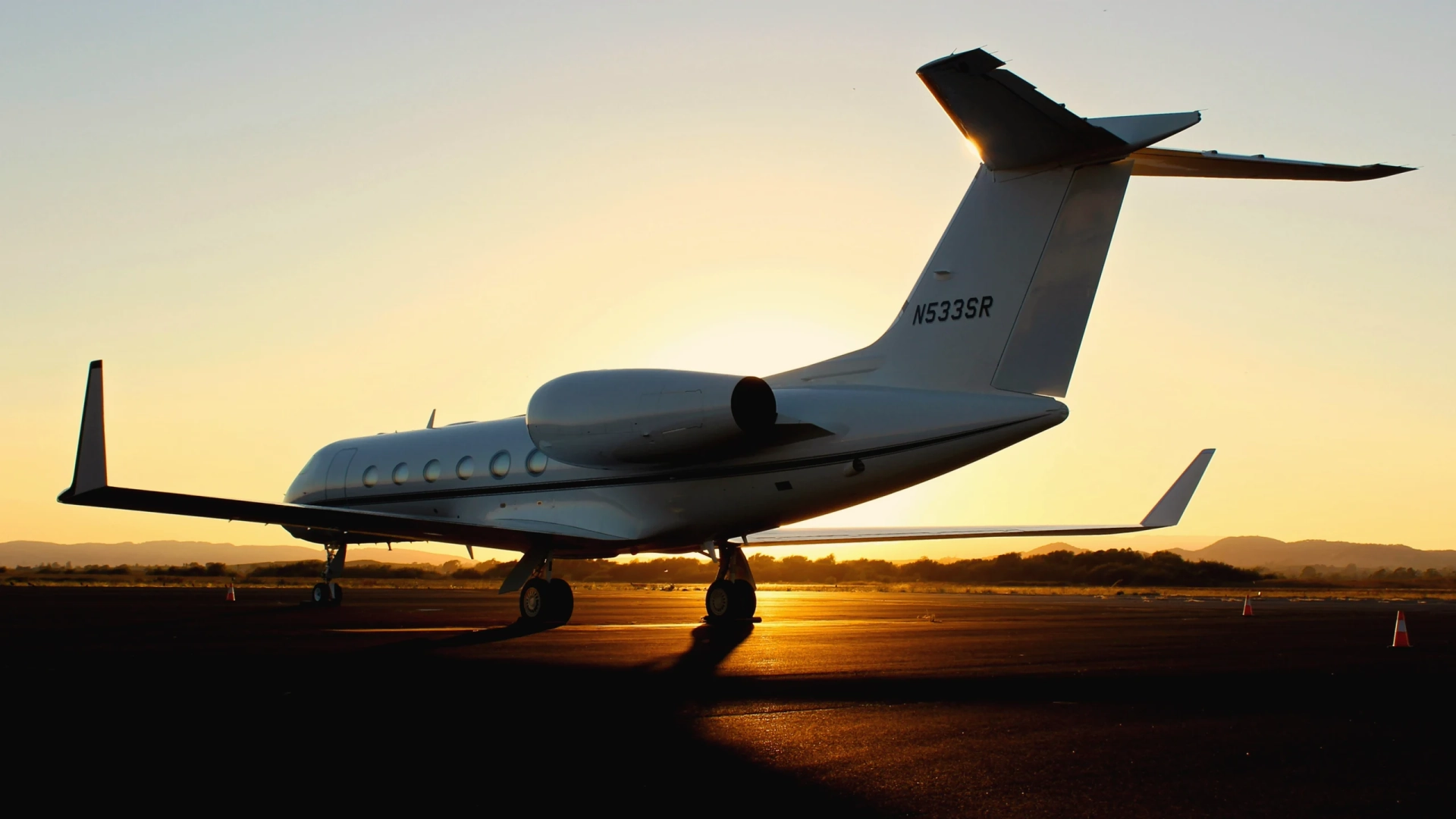
The Dassault Falcon 10X: The French Challenger
Dassault’s forthcoming Falcon 10X represents a shift toward extreme cabin width and efficiency. With an estimated acquisition price of $75 million, the 10X is positioned to compete directly with the Global 7500. While the aircraft is still entering service, the projected operational model suggests a slightly more favorable fuel burn due to the advanced aerodynamics of the wing design.
Projected annual fixed costs for the 10X mirror the industry standard: $400,000 for crew, $250,000 for management, and $450,000 for insurance. The maintenance reserve, however, is expected to be slightly lower than its competitors due to Dassault’s modular approach to engine servicing, estimated at $700,000 to $1 million per year. Total annual costs for the 10X are projected to land between $2.8 million and $4.2 million, assuming a 300-hour flight schedule.
The Fractional Alternative: NetJets and the Threshold of Rationality
For those whose flight requirements fall below the 200-hour-per-year mark, the economics of full ownership rarely align with the reality of utilization. A 1/16th share in a Gulfstream through NetJets requires an initial buy-in of approximately $1.2 million. This share grants the owner 50 flight hours per year. Beyond the buy-in, the owner pays a monthly management fee of roughly $16,000—totaling $192,000 annually—plus an occupied hourly rate that covers fuel and variable maintenance.

The "rationality threshold" is a concept frequently cited by aviation consultants like those at Jetcraft. If an individual’s flight profile exceeds 300 hours annually, the economies of scale shift in favor of full ownership. At 300 hours, the hourly cost of a fractional share becomes prohibitive, often exceeding the cost of operating a dedicated aircraft. Below 200 hours, the fixed costs of a full aircraft—specifically the insurance, hangarage, and crew salaries—create a "dead weight" scenario where the cost per flight hour skyrockets.
A Scene at Teterboro: The Reality of the Ramp
On a Tuesday morning in October at Teterboro Airport, the air is sharp with the scent of kerosene and the low-frequency hum of auxiliary power units. A G650ER sits on the ramp, its winglets catching the early light. The owner, a venture capitalist based in Greenwich, arrives by car, his driver pulling directly to the base of the stairs. There is no security line, no boarding pass, and no delay. His pilot, a veteran of the Air Force with 12,000 flight hours, greets him with a nod.
Inside, the cabin is set to 68 degrees. The owner settles into a leather-clad seat, his laptop already connected to the high-speed Ka-band satellite internet. He is not merely traveling; he is extending his office. Within fifteen minutes of his arrival, the engines are spooled, and the aircraft is cleared for departure to London Luton. This is the product being purchased: not just the airframe, but the reclamation of the hours that would otherwise be lost to the friction of commercial transit.
However, the reality of this scene is underpinned by a massive, invisible infrastructure. While the owner enjoys his espresso, his management company is currently negotiating with a hangar facility in Geneva to ensure space for a three-day stay. Simultaneously, the maintenance team is reviewing a service bulletin regarding the aircraft’s landing gear sensors, a task that will require the aircraft to be grounded for 48 hours in the coming month. The owner is insulated from this, but his balance sheet is not.
The Hidden Variables: Depreciation and Regulatory Compliance
Depreciation remains the most significant, yet often overlooked, cost of ownership. According to data from the Aircraft Bluebook, a new large-cabin jet can lose 15% to 20% of its value in the first two years of operation. For a $65 million Gulfstream, this equates to a paper loss of nearly $13 million in the first 24 months. While tax depreciation—specifically bonus depreciation under the Tax Cuts and Jobs Act—can offset some of this, the underlying market value of the asset remains subject to the whims of global economic cycles.
Regulatory compliance adds another layer of complexity. Operating under Part 135, which allows the owner to charter out the aircraft to third parties to offset costs, introduces a rigorous set of FAA requirements. The aircraft must be maintained to a higher standard, and the crew must undergo more frequent training. Furthermore, the owner must navigate the complexities of the "hobby loss" rules under Section 183 of the Internal Revenue Code, which can limit the ability to deduct expenses if the aircraft is not operated with a genuine profit motive.
The Management Ecosystem: Gama, ExecuJet, and Jet Aviation
The choice of a management company is as critical as the choice of the aircraft itself. Gama Aviation, for instance, provides a comprehensive suite of services that includes flight department management, maintenance coordination, and charter revenue generation. Their fee structure is typically a blend of a flat monthly management fee and a percentage of the charter revenue generated.
ExecuJet, a subsidiary of Luxaviation, offers a global footprint that is particularly advantageous for owners who frequently traverse Europe and the Middle East. Their ability to leverage local hangarage and ground handling services can significantly reduce the "hidden" costs of international operations. Jet Aviation, meanwhile, is often favored by owners who prioritize maintenance excellence, as their global network of MRO (Maintenance, Repair, and Overhaul) facilities is among the most respected in the industry.
The Economic Reality of the 300-Hour Threshold
The 300-hour threshold is not an arbitrary figure; it is the point at which the fixed costs of ownership are sufficiently diluted by the volume of usage. At 100 hours per year, the fixed costs of a G650ER—approximately $1.5 million in insurance, hangarage, and crew—result in an effective fixed cost of $15,000 per hour, before even accounting for fuel or maintenance. At 300 hours, that fixed cost drops to $5,000 per hour.
When comparing this to the charter market, where a G650ER might command $15,000 to $20,000 per hour, the math becomes compelling. However, the charter market is subject to availability and the volatility of peak-season pricing. During the World Economic Forum in Davos or the Monaco Yacht Show, charter availability for large-cabin aircraft often evaporates, leaving the charter-dependent traveler stranded. Ownership provides the ultimate insurance against this volatility: the certainty of the asset.
The Future of the Asset Class
As we look toward 2026, the aviation market is seeing a shift toward sustainable aviation fuel (SAF) mandates. While SAF is currently more expensive than conventional Jet-A, many corporations and high-net-worth individuals are beginning to incorporate it into their operational budgets as part of their environmental, social, and governance (ESG) commitments. The cost of SAF, which can be 2 to 3 times that of standard fuel, will likely become a standard line item in the annual operating budget of any modern flight department.
Furthermore, the integration of advanced avionics—such as enhanced vision systems and predictive maintenance software—is changing the way aircraft are maintained. Predictive maintenance, which uses real-time data from the engine and airframe to anticipate failures before they occur, is reducing the frequency of unscheduled maintenance events. This is a positive development for the owner, as it increases the aircraft's availability and reduces the cost of emergency repairs.
Final Observations
The acquisition of a private jet is the ultimate expression of control over one's environment. It is a commitment to a specific way of working and living that prioritizes time above all other currencies. Yet, the numbers are unforgiving. Whether one chooses the Gulfstream G650ER, the Bombardier Global 7500, or the forthcoming Dassault Falcon 10X, the financial commitment is substantial and ongoing.
The successful owner is one who understands that the aircraft is not an investment in the traditional sense, but a utility. It is a machine that requires a dedicated team of professionals to operate, a rigorous adherence to maintenance schedules to remain airworthy, and a constant flow of capital to remain operational. For those who fly 300 hours or more, the economics of ownership provide a level of reliability and efficiency that no other mode of transport can match. For those who fly less, the fractional and charter markets remain the more prudent path. The sky remains open, but the cost of entry is measured in far beyond the price of the airframe; it is measured in the meticulous management of every hour spent at 45,000 feet.
Market Intelligence current as of April 2026
The Curator's Selection
IntelligenceVistaJet Programme: The Alternative to Ownership
VistaJet's programme offers guaranteed aircraft availability globally with transparent hourly pricing — the most frequently cited alternative for owners considering whether to sell their aircraft.
JamesEdition: Pre-Owned Jet Marketplace
The world's largest luxury marketplace includes a dedicated aircraft section with authenticated pre-owned jets across all categories and price ranges.
Shopygram may receive a referral fee when you transact through these links. Our editorial recommendations are independent of commercial relationships.
The Intelligence Behind the Destination
At what annual flying hours does it make sense to own rather than charter?
The broadly accepted breakeven for a midsize jet is 200–250 hours annually. Below this threshold, ad-hoc charter — or a membership programme like VistaJet or Wheels Up — is almost always more economical on a total cost basis. Above 300 hours annually, ownership begins to show genuine economic advantage, particularly when the aircraft generates charter revenue during downtime.
What are the biggest unexpected costs of private jet ownership?
In order of surprise-to-first-time-owners: unscheduled maintenance (a single engine event can cost $150,000–$500,000 not covered by insurance); crew training and recurrency (each pilot requires annual simulator training at $15,000–$25,000 per person); interior refurbishment (a comprehensive cabin refit runs $150,000–$400,000 and is typically needed every 5–7 years); and mandatory avionics upgrades as regulatory requirements change.
What is an aircraft management company and do I need one?
An aircraft management company handles all operational aspects of running your aircraft: crew hiring and scheduling, maintenance oversight, hangar coordination, insurance management, and regulatory compliance. For an individual owner, management is effectively mandatory unless you have aviation industry expertise. Management fees run $10,000–$25,000 per month for a midsize jet, depending on services included.
Should I put my jet on a charter programme?
Charter income can offset 30–60% of fixed annual costs, making ownership more economical. However, it introduces constraints: your aircraft may be unavailable when you want it, charter wear increases maintenance frequency, and the management complexity of a charter operation requires professional oversight. For owners flying fewer than 150 hours annually in consistent markets, a charter programme typically improves the economics materially.
What is the best aircraft to buy for first-time jet owners?
The Cessna Citation XLS+ (midsize, 8 passengers, 2,100nm range) and the Bombardier Challenger 350 (super-midsize, 10 passengers, 3,200nm range) are the most widely recommended first-ownership aircraft. Both have deep maintenance networks, high resale liquidity, and operating economics that are well-understood. Ultra-long-range jets (Gulfstream G650, Global 7500) represent an economic commitment most first-time owners underestimate.
The Author
Orla Deveney
Contributing Editor — Travel, Hospitality & Lifestyle IntelligenceAviation and marine correspondent with a decade covering private aviation markets, superyacht ownership, and ultra-high-net-worth mobility.