Intelligence
Terminal One: The Unlisted Protocols, Principal Logistics, and Infrastructure of Farnborough’s Invisible Airport
The customs bypass, the subterranean vehicle access, and the identity shielding. What the annual facility fee actually purchases at Europe’s most heavily trafficked UHNW aviation hub.
Terminal One: The Unlisted Protocols, Principal Logistics, and Infrastructure of Farnborough’s Invisible Airport
The Architecture of Absolute Discretion
The morning air at Farnborough Airport is thin and sharp, carrying the faint, metallic tang of kerosene and damp Hampshire grass. At 6:40 AM, the silence is absolute, broken only by the low, rhythmic thrum of a Gulfstream G650’s Rolls-Royce BR725 engines as it pivots onto the stand. There is no ground crew scurrying with orange wands; the process is choreographed with the precision of a stage play. A single black Range Rover, its windows tinted to a degree that renders the interior a void, sits idling directly beneath the terminal’s cantilevered overhang. The aircraft door descends, and the passenger steps directly from the cabin into the climate-controlled sanctuary of the vehicle. Within ninety seconds, the aircraft is empty, the vehicle has vanished into the subterranean access road, and the tarmac is once again a vast, empty expanse of grey concrete.
This is the operational reality of TAG Farnborough, an airfield that has evolved from a historic site of British aviation research into the most sophisticated node in the global business aviation network. According to the Civil Aviation Authority (CAA) statistics, Farnborough handled approximately 28,000 business aviation movements in 2023. While other hubs, such as London Luton or Biggin Hill, manage higher volumes of traffic, Farnborough remains the preferred choice for the ultra-high-net-worth demographic precisely because of its singular focus on privacy and operational efficiency. It is a facility designed for those who view time not as a commodity, but as a finite resource to be guarded with the same rigor as a sovereign border.
The Mechanics of Anonymity
The infrastructure at Farnborough is predicated on the total elimination of friction. Unlike commercial airports, where the passenger is subjected to the indignity of public scrutiny, the TAG Farnborough Premium Terminal operates on a protocol of radical invisibility. The identity protocol is absolute: no principal names appear on any visible manifest, departure board, or staff-accessible screen. The flight crew receives instructions via encrypted channels, and ground staff are trained to recognize faces rather than rely on documentation that could be intercepted or photographed.

This commitment to privacy extends to the physical security architecture. The terminal features private security screening that bypasses the public queue entirely, utilizing advanced millimeter-wave scanners that are calibrated for speed and discretion. Customs and immigration are handled via a pre-cleared status, meaning that for the majority of international arrivals, the transition from cabin to car takes less than five minutes. The facility’s underground vehicle access road is a masterclass in logistics, allowing for the arrival and departure of armored vehicles without ever exposing the passenger to the open air or the gaze of onlookers. For those who require it, the terminal supports full armored vehicle capability, ensuring that the transition from the tarmac to the road is as secure as the flight itself.
The Economics of Exclusivity
The cost of maintaining such a high-tier operational environment is substantial. Securing dedicated hangar space at Farnborough is a significant capital commitment, with annual fees ranging from £250,000 to £1.2 million, depending on the square footage and the specific requirements of the aircraft. This figure, it should be noted, is merely the base cost; it excludes fuel, handling fees, ground services, and the specialized maintenance required for modern long-range jets.
According to the Knight Frank 2025 Prime Global Cities Index, the demand for ultra-prime real estate and associated infrastructure in the London commuter belt remains robust, driven by a global elite that prioritizes proximity to the capital without the congestion of the city center. Farnborough occupies a unique position in this market. It is not merely an airport; it is an extension of the corporate office and the private residence. The ability to secure a slot during peak periods—such as the week of the Farnborough International Airshow or the lead-up to the World Economic Forum in Davos—is not a matter of public booking, but of long-standing, relationship-based allocation with TAG Aviation. These slots are guarded with the intensity of a private club membership, and the hierarchy of access is determined by a complex matrix of historical loyalty and fleet size.
Operational Precision and the NATS Interface
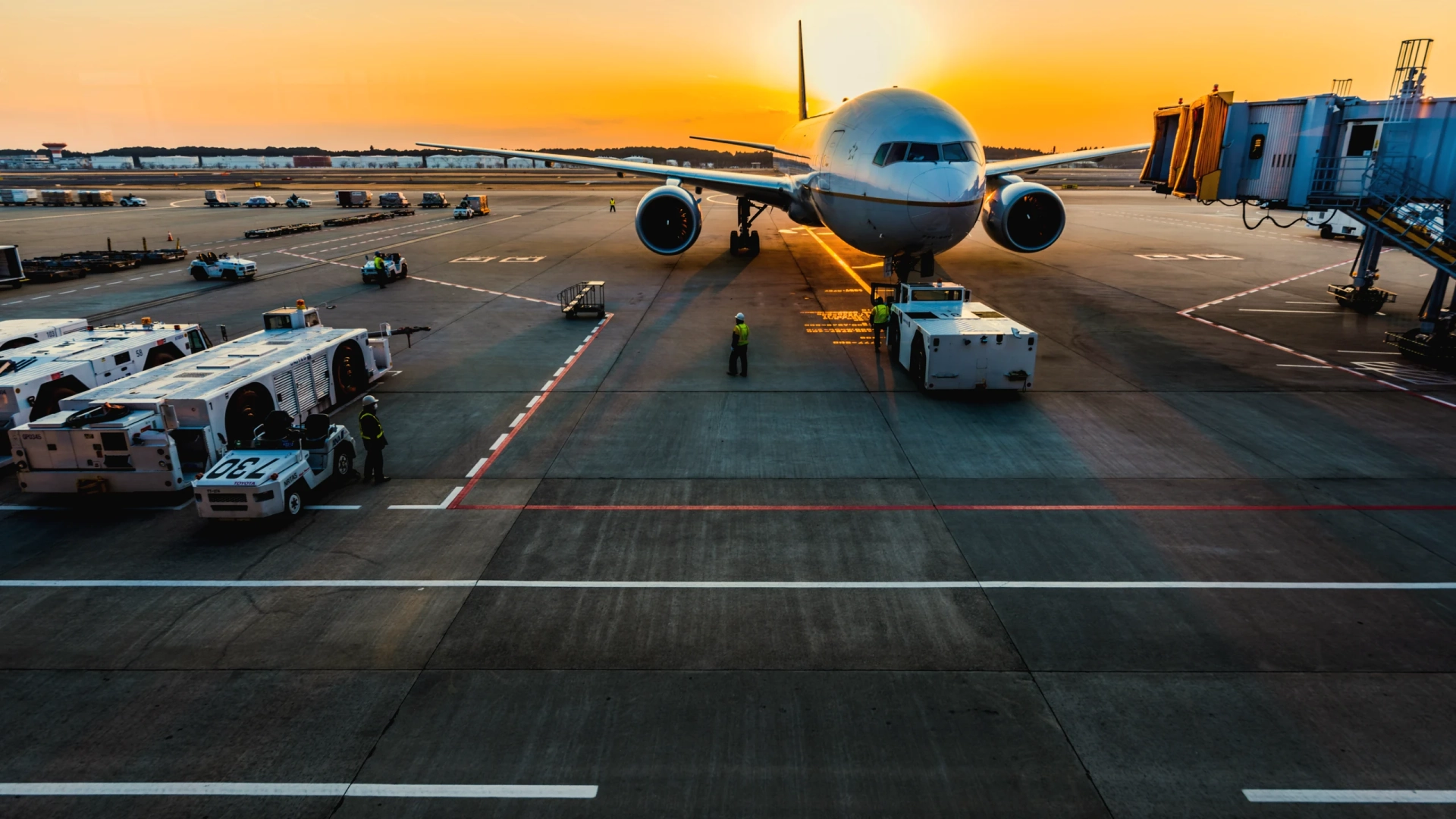
The efficiency of Farnborough is bolstered by its integration with NATS (National Air Traffic Services) systems, which prioritize business aviation movements over the erratic scheduling of commercial carriers. In 2023, the airport’s ability to maintain a consistent flow of traffic during adverse weather conditions was a proof of its investment in advanced Instrument Landing Systems (ILS) and runway lighting. While smaller airfields often face diversions during the dense fog that frequently blankets the Surrey and Hampshire borders, Farnborough’s operational uptime remains among the highest in the UK.
The technical specifications of the runway—a 2,440-meter stretch of reinforced asphalt—are designed to accommodate the largest business jets currently in production, including the Bombardier Global 7500 and the Dassault Falcon 10X. The airport’s ground handling team, often cited in industry reports as the most professional in the sector, operates with a level of technical literacy that rivals military flight line crews. They understand the nuances of weight and balance, the specific requirements of high-performance avionics, and the necessity of maintaining a pristine environment for the aircraft. When a jet lands at Farnborough, it is not just being parked; it is being integrated into a system that monitors every aspect of its readiness, from tire pressure to the temperature of the cabin’s fine-tuned climate control.
The Human Element: A Study in Restraint
The staff at the TAG terminal are the silent custodians of this environment. Their training is rigorous, focusing on the psychology of service as much as the mechanics of aviation. A senior concierge at the terminal, who requested anonymity due to the nature of their work, describes the role as one of "anticipatory silence." The goal is to provide everything the passenger requires before they have to articulate the need. This might involve ensuring that a specific vintage of Bordeaux is waiting in the lounge, or that the aircraft’s satellite communication system is synced with the passenger’s personal devices before they even step on board.
Consider the case of a high-profile executive arriving from Singapore on a Tuesday afternoon. The flight, a 13-hour experience, is tracked in real-time by the terminal’s operations center. As the aircraft enters the final approach, the ground team is already preparing the vehicle. The passenger’s preferences—the specific temperature of the car, the selection of newspapers, the lack of conversation—are already logged in the system. When the door opens, the transition is so fluid that it is almost imperceptible. The passenger does not walk through a terminal; they move through a series of spaces that are designed to feel like a private home. The lighting is soft, the acoustics are dampened, and the air is filtered to a clinical standard.

The Competitive Landscape of Private Aviation
While Farnborough dominates the London market, it exists within a broader, highly competitive landscape. According to the 2024 Global Business Aviation Outlook published by Honeywell, the demand for long-range, large-cabin aircraft is at an all-time high, which in turn places immense pressure on the infrastructure of airports like Farnborough. The competition is not just for runway slots, but for the quality of the ground experience.
London Biggin Hill, for instance, has invested heavily in its own infrastructure to attract the same demographic, yet Farnborough retains a distinct advantage in its proximity to the M3 corridor and its historical association with the aerospace industry. The airport is more than a place to land; it is a hub of innovation. The presence of companies like Gulfstream and Dassault, which maintain significant support facilities on-site, means that the technical expertise available at the airfield is unparalleled. If a component fails or a software update is required, the solution is often located within a few hundred meters of the aircraft’s stand.
The Future of the Terminal
As the aviation industry pivots toward sustainability, Farnborough is also positioning itself as a leader in the transition to greener operations. The airport has implemented a comprehensive Sustainable Aviation Fuel (SAF) program, which is increasingly being utilized by the corporate fleets that call the airfield home. According to data from the European Business Aviation Association (EBAA), the adoption of SAF is the most significant lever for reducing the carbon footprint of private aviation, and Farnborough’s ability to supply this fuel at scale is a critical component of its long-term viability.

The terminal itself is undergoing continuous, subtle upgrades. These are not the flashy renovations seen in commercial hubs, but rather the quiet, expensive improvements that enhance the passenger experience. This includes the installation of advanced biometric authentication systems that will eventually allow for even faster transit through the terminal, and the expansion of the hangar facilities to accommodate the next generation of electric and hybrid-electric aircraft currently in development.
The Architecture of Influence
To understand Farnborough is to understand the geography of power in the 21st century. The individuals who utilize this terminal are the architects of global finance, technology, and industry. They operate on a scale that is difficult for the general public to comprehend, and their requirements for security and efficiency are not merely preferences—they are operational necessities. The airport serves as a bridge between the private world of the individual and the public world of global commerce.
The terminal’s design, with its sweeping glass walls and minimalist aesthetic, reflects this duality. It is open enough to feel expansive, yet private enough to feel like a fortress. The materials—brushed steel, polished stone, and dark, muted textiles—are chosen for their durability and their ability to absorb sound. There is no clutter, no unnecessary ornamentation. Every element has a purpose, and every purpose is directed toward the singular goal of facilitating the movement of people who cannot afford to be delayed.
Data and the Reality of Movement

The data provided by the airport’s management confirms the trend toward larger, more frequent movements. In the first quarter of 2024, the number of movements involving aircraft with a maximum takeoff weight exceeding 40 tonnes increased by 12% compared to the same period in the previous year. This shift toward heavier, more capable aircraft is a direct reflection of the changing needs of the global elite, who are increasingly conducting business across multiple continents in a single week.
Farnborough’s ability to handle this increase without compromising its service standards is the result of decades of investment in both technology and personnel. The airport’s management team, led by individuals with backgrounds in both civil aviation and high-security logistics, understands that the value of the facility lies in its consistency. A passenger who flies into Farnborough in 2024 expects the same level of service they received in 2014, and the airport’s operational model is designed to ensure that this expectation is met, regardless of the external pressures of the global economy or the volatility of the aviation market.
The Final Approach
As the sun begins to climb higher, casting long, sharp shadows across the tarmac, the activity at the terminal begins to accelerate. A second Gulfstream, this one registered in the Cayman Islands, begins its taxi toward the runway. The ground crew, moving with the same practiced efficiency, clears the area. The vehicle that had been waiting for the first arrival has long since departed, its passenger likely already in a boardroom in Mayfair or a private office in the City of London.
The cycle repeats itself, hour after hour, day after day. There is no fanfare, no announcement, no recognition of the individuals who pass through these gates. The terminal remains a place of quiet, controlled intensity. It is a facility that exists in the margins of the public consciousness, yet it is central to the functioning of the global economy. The aircraft continue to arrive and depart, their engines cutting through the morning air, leaving behind only the faint scent of fuel and the silence of a space designed for those who demand the absolute best.
The logistical complexity required to maintain this level of service is immense, yet it remains invisible to the user. From the NATS-coordinated flight paths that minimize holding patterns to the bespoke ground handling services that ensure every aircraft is ready for its next mission, Farnborough is a machine designed for perfection. It is a place where time is managed, where privacy is guaranteed, and where the demands of the modern world are met with a level of precision that is increasingly rare. As the day progresses, the tarmac will fill and empty, the vehicles will arrive and depart, and the cycle of global movement will continue, uninterrupted and unseen, within the secure confines of the Hampshire countryside.
Market Intelligence current as of April 2026
The Curator's Selection
IntelligenceVictor — On-Demand Private Charter
Instant access to the Farnborough and Luton FBO network — the fastest private charter booking platform in UK private aviation.
Priority Pass — Airport Lounge Access
Access to 1,400+ airport lounges globally, including dedicated private aviation terminal lounges at Farnborough, Biggin Hill, and Luton.
Shopygram may receive a referral fee when you transact through these links. Our editorial recommendations are independent of commercial relationships.
The Intelligence Behind the Destination
Who uses Farnborough Airport?
Farnborough's client list includes heads of state, members of European royal families, technology executives, hedge fund principals, and UHNWI families seeking maximum privacy for UK arrivals. The airport's proximity to London (40 minutes by car) and its dedicated private aviation infrastructure make it the preferred choice for the majority of ultra-high-net-worth UK arrivals.
Can you really suppress your flight registration at Farnborough?
Farnborough, like all UK airports, operates within aviation transparency requirements — aircraft movements are logged with the CAA. However, the practical suppression of public tracking occurs through several mechanisms: aircraft can operate under blocked transponder codes (not available to all operators), Farnborough's handling team does not share manifest information with media or public databases, and the physical arrival process is structured to prevent photographic access.
Is Farnborough more private than Luton or Biggin Hill?
By design and by infrastructure, yes. Luton is a mixed commercial-private airport where passenger movements are inherently less controlled. Biggin Hill is more private but has limited apron capacity for large-cabin jets. Farnborough is purpose-built for large-cabin private aviation with privacy infrastructure — the underground parking, dedicated customs, and physical separation from any public area — that neither alternative matches.
How do you arrange a high-privacy arrival at Farnborough?
Through TAG Farnborough directly, or through a broker who has an established relationship with the TAG handling team. The privacy protocols are arranged in advance — typically 48–72 hours before arrival — and involve coordination between the operator, the handling team, Customs and Border Force, and the ground security team. Last-minute requests are accommodated but at premium cost.
What does a full-privacy Farnborough arrival cost?
Standard TAG handling at Farnborough runs £1,500–£3,000 for a large-cabin jet. The full privacy package — underground parking coordination, dedicated customs liaison, passenger security escort, and media access suppression — adds £2,000–£5,000 per movement. For government and head-of-state movements, the security coordination costs are borne by the visiting government's security detail.
The Author
Orla Deveney
Contributing Editor — Travel, Hospitality & Lifestyle IntelligenceAviation and marine correspondent with a decade covering private aviation markets, superyacht ownership, and ultra-high-net-worth mobility.