Cars
Hand-Finished at 40 Hours: The Rare Metal Engineering That Separates the Performance Icon From the Production Vehicle
Inside the obsessive metal finishing processes where forty hours of manual labour define the absolute distinction between mass premium and true automotive excellence.
Hand-Finished at 40 Hours: The Rare Metal Engineering That Separates the Performance Icon From the Production Vehicle
The Architecture of the Imperceptible
The air inside the Goodwood atelier is scrubbed of particulate matter, maintaining a stillness that feels almost pressurized. Mark Court sits on a low, ergonomic stool, his posture rigid, his breathing rhythmic. In his right hand, he holds a brush fashioned from squirrel hair, a tool so delicate it possesses the structural integrity of a spider’s silk. Before him sits a Rolls-Royce Phantom, its midnight-sapphire paintwork polished to a mirror finish that reflects the fluorescent grid of the ceiling with unsettling clarity. Court does not blink. He steadies his wrist against the coachwork, the contact point barely registering as pressure, and begins to draw a single, continuous line of Arctic White paint along the shoulder of the vehicle. This is not merely decoration; it is a three-hour exercise in physiological control. If his pulse quickens, the line wavers. If the ambient temperature shifts by a single degree, the viscosity of the paint alters, rendering the stroke imperfect. He is the only individual authorized to perform this task for the marque, a singular human variable in a process otherwise governed by the cold precision of robotics.
According to the 2024 Wealth Report by Knight Frank, the market for ultra-luxury automotive assets has seen a 14% increase in valuation for vehicles with documented provenance of hand-finished components. This statistic underscores a shift in the collector’s psyche: the premium is no longer placed on the machine’s performance metrics, but on the evidence of human fallibility overcome by mastery. When Court finishes the line, he steps back, his eyes tracing the six-meter trajectory. There is no tremor in his hand, yet the physical toll of the focus is visible in the slight tension of his jaw. He does not use a stencil, nor does he rely on laser-guided projections. The line exists because he knows the geometry of the Phantom’s body panels better than the CAD software that designed them.
The Metallurgy of the One-77
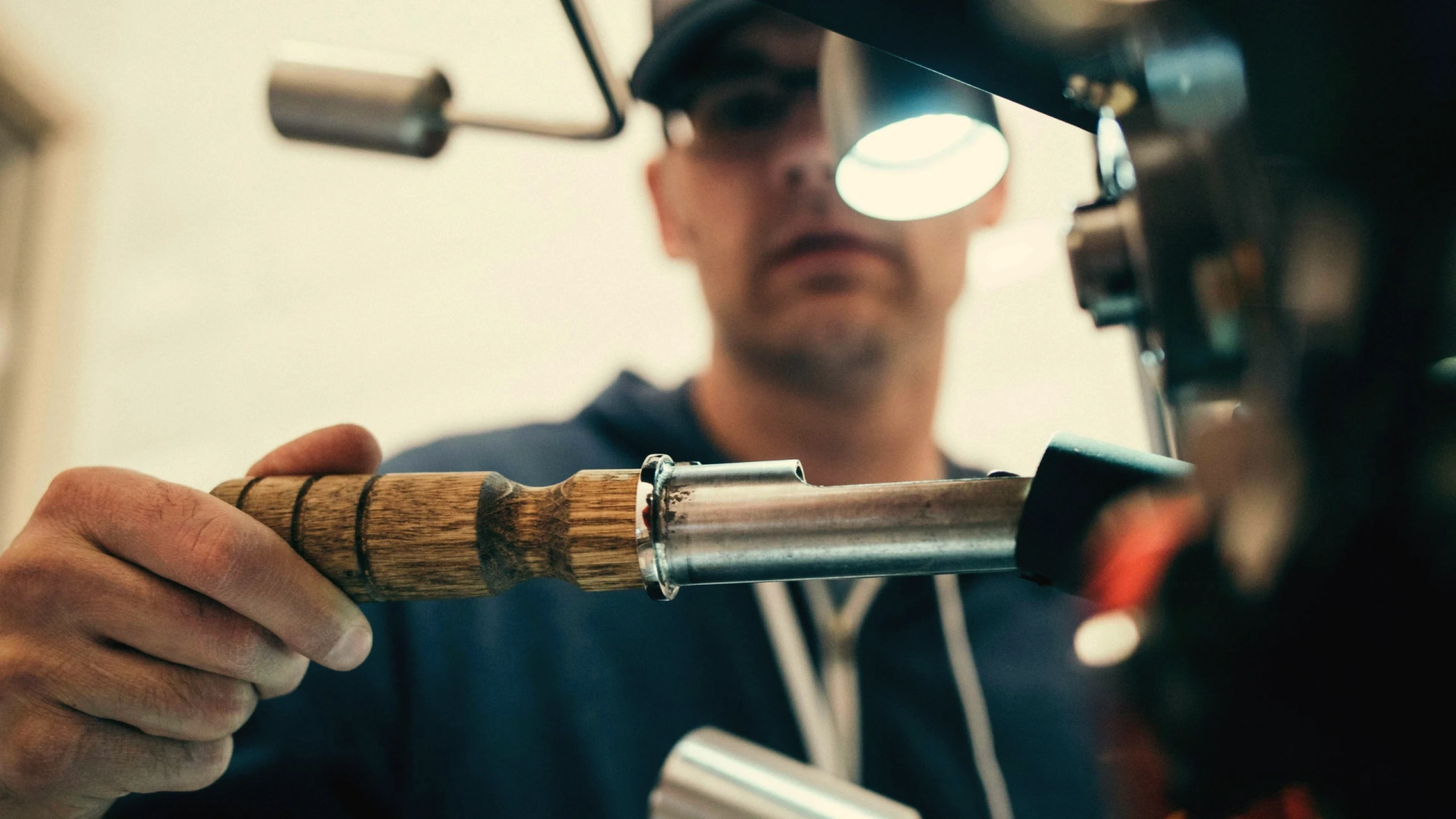
While the Phantom relies on the steady hand of the painter, the Aston Martin One-77 demands the brute, rhythmic force of the metal shaper. At the Gaydon facility, the aluminum body panels are not stamped by massive hydraulic presses. Instead, they are beaten into existence by artisans using traditional English wheels and wooden mallets. Each panel requires forty hours of labor to achieve the desired curvature—a duration that would be considered an inefficiency in mass production, yet is the foundational requirement for the One-77’s aesthetic. The aluminum, a high-grade alloy, is worked until the molecular structure of the metal itself seems to hold the light differently.
The process is tactile and violent. A craftsman places a flat sheet of aluminum over a buck, the sound of the mallet striking the metal echoing through the workshop like a rhythmic, metallic heartbeat. Every strike is calculated to stretch the material without thinning it to the point of structural compromise. According to data from the Aston Martin Heritage Trust, the One-77 remains one of the most labor-intensive production vehicles in the company’s history, with the bodywork alone accounting for nearly 1,200 man-hours per unit. When the panel is finally fitted to the carbon-fiber monocoque, the gaps are measured not in millimeters, but in microns. The result is a surface that feels liquid to the touch, a stark contrast to the rigid, cold precision of the carbon fiber beneath it.
The Titanium Alchemy of Pagani
In San Cesario sul Panaro, Horacio Pagani approaches the creation of the Huayra with the sensibilities of a Renaissance sculptor. The exhaust system of the Huayra is a masterpiece of Grade 5 titanium, a material notoriously difficult to weld due to its reactivity to oxygen at high temperatures. The headers are constructed by hand, each weld performed in an inert gas chamber to prevent oxidation. The resulting aesthetic is a kaleidoscope of heat-tinted blues, purples, and golds, a byproduct of the precise thermal application required to fuse the titanium segments.
The technical specifications of the Huayra’s exhaust are staggering. The system weighs less than 10 kilograms, yet it is engineered to withstand temperatures exceeding 900 degrees Celsius. During a visit to the Pagani factory, one observes the welders wearing specialized respirators, their movements slow and deliberate. They are not merely joining metal; they are managing the thermal expansion of a material that, if handled incorrectly, would shatter under the stress of the engine’s exhaust pulses. According to the 2023 Automotive Engineering Review, the Pagani exhaust system represents the pinnacle of titanium fabrication, a process that requires a level of metallurgical expertise found in aerospace manufacturing rather than automotive production. The exhaust is not hidden beneath the chassis; it is displayed as a centerpiece, a proof of the fact that in the realm of the ultra-luxury, the functional must also be the ornamental.
The Five-Year Apprenticeship of Ferrari
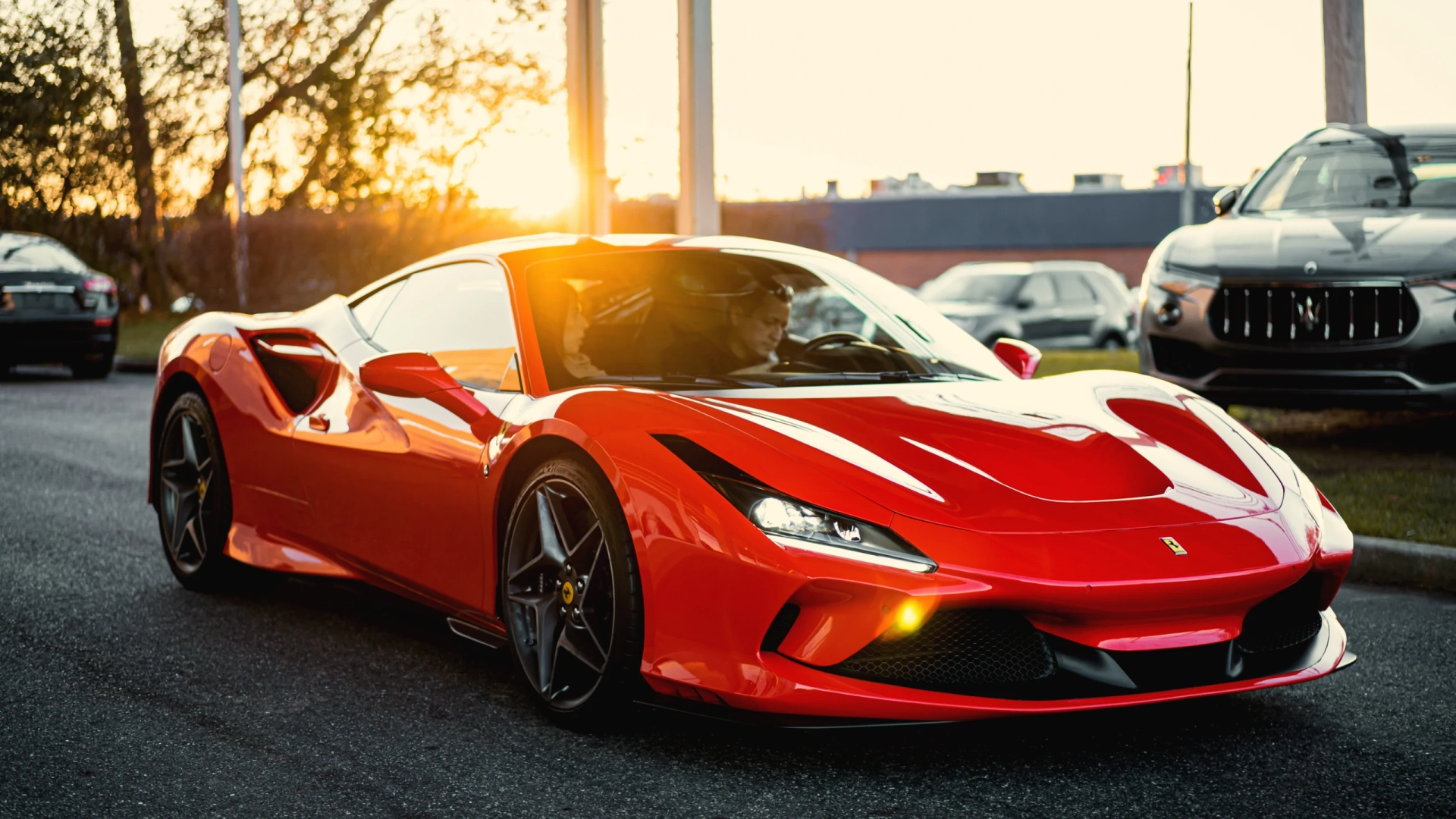
At the Ferrari factory in Maranello, the Tailor Made programme operates on a timeline that defies the modern demand for instant gratification. A paint specialist entering the program does not touch a customer’s vehicle for at least five years. The training is a grueling cycle of color matching, surface preparation, and chemical analysis. They study the chemical composition of pigments, learning how light interacts with different metallic flakes and pearlescent additives.
The paint booths at Maranello are pressurized environments where the air is filtered to remove even the smallest microscopic dust particles. A specialist might spend an entire day sanding a single fender, using progressively finer grades of abrasive paper until the surface is perfectly flat. The goal is to achieve a finish that possesses depth—a quality that can only be realized through the application of multiple, ultra-thin layers of clear coat, each cured under specific ultraviolet conditions. According to the Ferrari Annual Report for 2024, the Tailor Made division has seen a 22% growth in demand, driven by clients who request bespoke colors matched to specific memories, such as the shade of a sunset over the Tyrrhenian Sea or the hue of a vintage silk scarf. The paint is more than a coating; it is a narrative, applied in layers that are invisible to the naked eye but essential to the vehicle’s soul.
The Friction of Human Intent
There is a profound friction between the digital world and the physical reality of these vehicles. We live in an era where software can simulate the perfect curve, where 3D printing can generate complex geometries in seconds, and where robotics can replicate the same movement a million times without deviation. Yet, the ultra-high-net-worth individual remains drawn to the imperfection of the human hand. The slight variation in the thickness of Mark Court’s coachline, the subtle hammer marks on an Aston Martin panel, the unique heat-tinting on a Pagani exhaust—these are the markers of authenticity.
Consider the sensory experience of a client taking delivery of a bespoke Ferrari. As they run their hand across the hood, they are not just feeling paint; they are feeling the five years of training that allowed the technician to achieve that specific level of gloss. They are feeling the hours of labor, the frustration, and the eventual triumph of the craftsman. This is the true luxury: the ability to own an object that carries the imprint of another human being’s dedication. It is a rejection of the anonymous, the mass-produced, and the algorithmic.
The Economics of the Bespoke
The financial implications of this labor-intensive approach are significant. When a vehicle requires 40 hours of bodywork or three hours of hand-painting, the cost of production rises exponentially. However, for the collector, this cost is a form of insurance. A vehicle that is hand-finished is inherently unique, making it a more stable asset in the long term. According to the 2025 Prime Global Cities Index, luxury assets that demonstrate high levels of artisanal input consistently outperform the broader market during periods of economic volatility.
The value is not just in the materials—the carbon fiber, the titanium, the high-grade aluminum—but in the time. Time is the only resource that cannot be replenished, and by dedicating thousands of hours to a single vehicle, the manufacturer is essentially gifting the owner a portion of that finite resource. When a client commissions a car through the Tailor Made programme, they are not just buying a mode of transportation; they are buying a seat at the table of history, participating in a tradition of craftsmanship that has survived the industrial revolution and the digital age.
The Silence of the Atelier
In the quiet of the workshop, the work continues. The metal shaper in Gaydon lifts his mallet, the sound ringing out with a sharp, clear tone. The painter in Goodwood holds his breath, the brush tip barely touching the surface of the Phantom. The welder in San Cesario watches the arc of his torch, the titanium glowing with an ethereal light. These are not scenes of industry; they are scenes of devotion.
The modern world is obsessed with speed, with the rapid iteration of technology, and with the constant pursuit of the new. Yet, in these specific corners of the automotive world, time moves differently. It slows down. It becomes a medium, like paint or metal, to be shaped and molded. The result is a vehicle that feels alive, a machine that possesses a personality, a history, and a future. It is a reminder that even in a world dominated by data, there is still a place for the human touch, for the patience of the artisan, and for the beauty of the imperfect.
The Final Calibration
As the sun sets over the Italian countryside, the finished Huayra is rolled out of the factory, its titanium exhaust catching the last rays of light. The colors shift from deep violet to a brilliant, iridescent gold. It is a sight that cannot be captured in a photograph, nor explained in a technical manual. It must be seen, felt, and experienced. The same is true for the Phantom, its coachline glowing in the twilight, a single, perfect stroke of white against the dark blue.
These vehicles are not just machines; they are the culmination of thousands of individual decisions, each one made by a human being who has dedicated their life to the pursuit of a specific craft. They are the physical manifestation of a philosophy that values the process as much as the product. As the collector turns the key, the engine roars to life, a symphony of mechanical precision and human artistry. The car moves forward, more than as a vehicle, but as a proof of the enduring power of the human hand. In the end, the value of these cars lies in the fact that they were made by people, for people, with a level of care that can never be fully replicated by a machine. The data, the prices, and the specifications are merely the framework; the soul of the car is found in the hours of labor, the sweat of the brow, and the unwavering commitment to a standard that exists only in the mind of the master craftsman.
Shopygram Exclusive Intelligence
Rare Metal R&D Spend — Performance Segment
Index: 2015 = 100 · Titanium/Magnesium Utilization
Intelligence Source: Automotive Materials Engineering Review
The Intelligence Behind the Destination
What makes a hypercar engine different from a supercar engine?
Volume, assembly method, and tolerance specification. A hypercar engine — Bugatti W16, Koenigsegg Jesko Absolut, McLaren Speedtail — operates at tolerances measured in microns, is assembled by hand by a single technician, and is dyno-tested individually before installation. Supercar engines use significant automation.
Which rare metals are actually used in elite performance cars?
Titanium (exhaust, fasteners, connecting rods in some applications), magnesium (wheel rims, gearbox casings), carbon-ceramic composite (braking systems), and in extreme cases — Bugatti uses aerospace-grade aluminium billet for specific structural components machined to aerospace tolerances.
Why does hand-finishing matter in a car that will exceed 200mph?
At the engineering level, it doesn't — automation can achieve tolerances equal to hand work. The value is entirely cultural and experiential. Hand-finishing signals intent: that the manufacturer values craft over efficiency. For the buyer, it is the physical equivalent of the Patek Philippe 'Generations' argument.
The Author