Cars
The Hidden Atelier: The Commission Protocols, Material Science, and Personalisation Architecture of Rolls-Royce Bespoke
A complete Bespoke commission requires up to 18 months of artisanal labor. Inside the philosophical boundaries, the unlisted material libraries, and what Goodwood will ultimately refuse to build.
The Hidden Atelier: The Commission Protocols, Material Science, and Personalisation Architecture of Rolls-Royce Bespoke
The Architecture of Refusal
The air inside the Goodwood facility in West Sussex carries the faint, sharp scent of curing leather and the metallic tang of precision engineering. It is a space defined by what is possible, yet its true character is forged in the silence of what is not. Last autumn, a client arrived from the Highlands, clutching a swatch of weathered wool—a specific, centuries-old tartan belonging to a minor Scottish clan. He requested that the pattern be replicated in the headliner of his Phantom. The Bespoke team, after a brief consultation with the textile engineers, accepted the commission, tasking a specialist loom in the north of England to recreate the weave with the exact thread count of the original.
Three weeks later, a different client, a tech magnate from Silicon Valley, arrived with a request that the logo of a rival luxury automotive house be embroidered into the rear seat headrests of his Cullinan. The request was met with a polite, absolute refusal. At Rolls-Royce, the Bespoke division operates under a philosophy of creative sovereignty. They will reconstruct the interior of a vehicle to mirror the interior of a 19th-century library, but they will not serve as a canvas for the branding of others. This boundary is not merely a matter of corporate pride; it is a structural necessity for the brand’s identity.
According to the 2024 Knight Frank Wealth Report, the appetite for hyper-personalized assets among ultra-high-net-worth individuals has surged by 14% year-over-year, yet the friction between client desire and brand integrity remains the primary tension at Goodwood. Rolls-Royce currently employs 700 craftspeople, each a master of their specific discipline, from marquetry to leatherwork. They process 50,000 leather hides annually, sourced exclusively from high-altitude bulls in Southern Germany to ensure the absence of insect bites or barbed-wire scars. When a request threatens the hand-finish ethos—such as a demand for machine-stitched patterns in areas traditionally reserved for the needle of a master artisan—the answer is invariably no.
The Geometry of Constraint
The refusal to compromise is the bedrock of the Bespoke process. Since the implementation of a strict policy in 2017, the company has categorically rejected the use of exotic animal skins, including alligator, crocodile, and ostrich, regardless of the client’s willingness to pay. This decision, while limiting the palette of the ultra-luxury segment, has forced the design team to innovate with sustainable, high-performance materials. They now utilize complex, multi-layered wood veneers and intricate metal inlays that require hundreds of hours of manual labor, effectively replacing the visual impact of exotic skins with the tactile complexity of master-level craftsmanship.
The technical constraints are rigorous. For instance, the Starlight Headliner, a signature feature that incorporates 1,344 individual fibre-optic lights, requires 17 hours of manual placement. Each light must be positioned to mimic the exact constellation of the night sky as it appeared on a specific date and location—usually the client’s birthday or the day of their wedding. If a client requests a configuration that would compromise the structural integrity of the roof lining or the safety of the fibre-optic array, the request is denied. There is no expedited option for this process; the 12-to-18-month commission timeline is non-negotiable.
Data from the 2025 Prime Global Cities Index suggests that the concentration of wealth in urban hubs like Singapore, Dubai, and New York has led to a homogenization of luxury goods. Rolls-Royce counters this by ensuring that 95% of all vehicles leaving the Goodwood factory now feature some form of Bespoke intervention. This is not a manufacturing line in the traditional sense; it is a series of ateliers where the machine is a tool, not a master. If a design requires a laser-cut finish that removes the human touch, the engineering team will revert to hand-chisel techniques, even if it adds weeks to the production schedule.
The Gallery and the Limits of Art
The Gallery, an installation space integrated into the dashboard of the Phantom, represents the most ambitious intersection of automotive design and fine art. It allows for a bespoke commission to be displayed behind a single pane of glass. One client recently commissioned a porcelain artist to create a series of hand-painted floral motifs, while another requested a 3D-printed gold-plated map of their estate. However, the refusal policy extends here as well. The team will not install any piece that creates glare for the driver, nor will they accept materials that are prone to outgassing or degradation under the extreme temperature fluctuations of a car interior.
In 2023, a collector requested a dashboard inlay made of raw, unsealed volcanic rock. The engineering team conducted a series of stress tests, concluding that the material would shed microscopic particles under vibration, potentially damaging the vehicle’s sensitive electronic components. The request was declined. Instead, the team worked with the client to source a stabilized, polished basalt that offered the same aesthetic weight without the mechanical risk. This is the Goodwood standard: the client’s vision is the starting point, but the brand’s technical legacy is the final arbiter.
The paint shop, which houses a library of 44,000 catalogued colours, is another site of quiet resistance. If a client brings a sample of a colour that is chemically unstable—such as a pigment that would fade under UV exposure within a year—the team will refuse to apply it. They will instead spend weeks in the laboratory, reformulating the pigment to ensure it meets the brand’s 20-year durability standard. This refusal to accept "good enough" is what separates a custom vehicle from a Bespoke Rolls-Royce.
The Anatomy of the Commission
The process begins in the office of a Bespoke Lead Designer. Here, the conversation is less about sales and more about biography. A client might spend four hours discussing the specific shade of a sunset they witnessed in the Maldives, or the texture of a vintage watch strap they have worn for decades. The designer listens, takes notes, and then translates these abstract memories into technical specifications.
Consider the case of a recent commission for a Ghost, where the client requested an interior leather dyed to match the exact hue of a specific vintage Bordeaux. The Bespoke team spent six weeks testing various dye concentrations on the leather hides. When the initial results were presented, the client was satisfied, but the lead artisan noticed a slight inconsistency in the grain texture under direct sunlight. The team scrapped the entire batch of leather and restarted the process. The client was not informed of the delay until the final product was perfect.
According to the 2024 Luxury Goods Market Study by Bain & Company, the shift toward "hyper-personalization" is the most significant trend in the ultra-luxury sector, yet few brands have the infrastructure to support it without diluting their core identity. Rolls-Royce maintains this balance by keeping the Bespoke team physically integrated with the assembly line. There is no "Besoke Department" in a separate building; the artisans work alongside the engineers, ensuring that every request is vetted for feasibility in real-time.

The Silence of the Craftsman
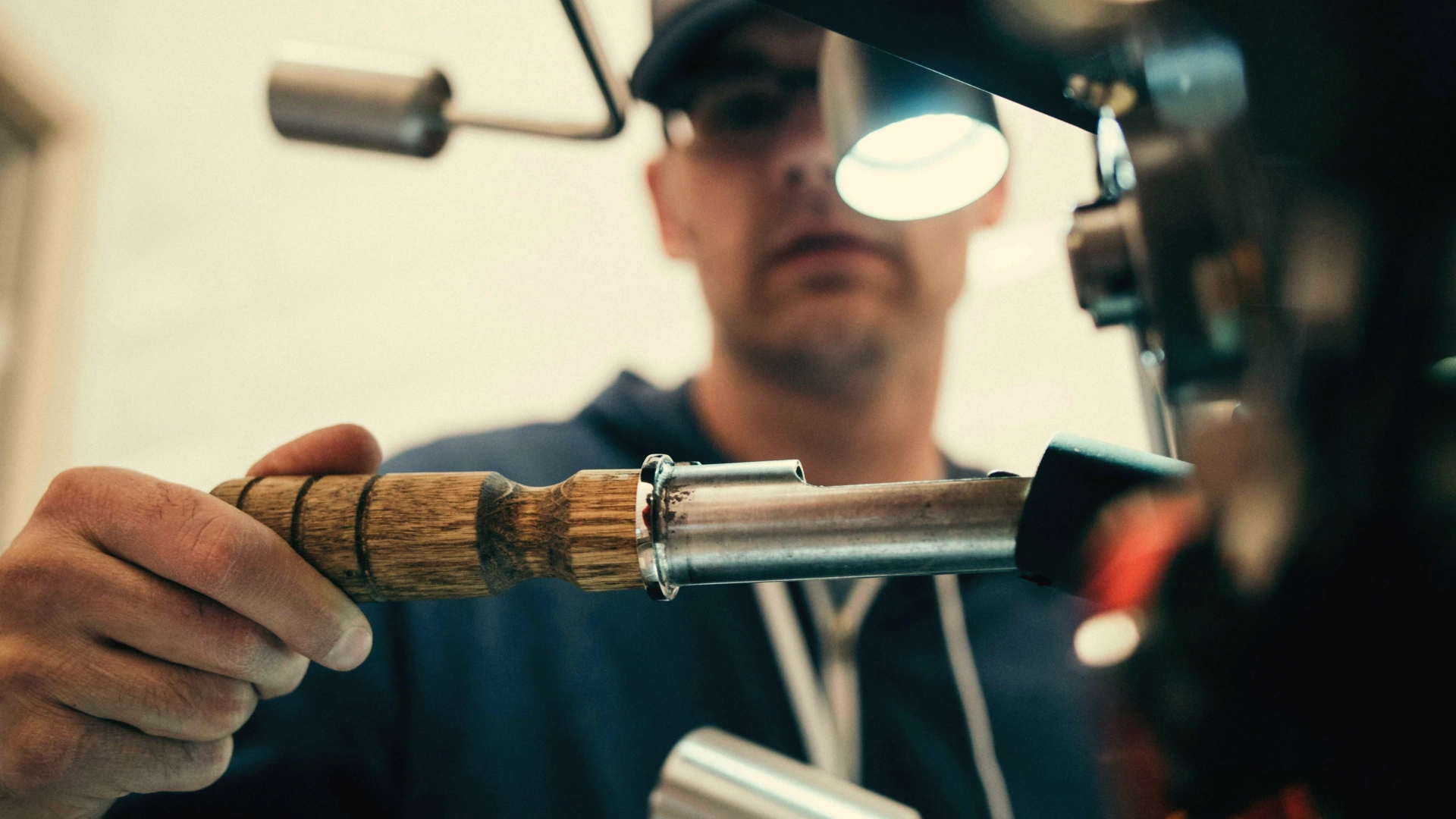
The interior of the Goodwood facility is remarkably quiet. There is no cacophony of robotic arms or the screech of heavy machinery. Instead, one hears the rhythmic tapping of hammers, the soft rustle of leather, and the occasional murmur of a consultation. This environment is designed to foster concentration. When a master woodworker is inlaying a piece of mother-of-pearl into a dashboard, they are working in a state of absolute focus. Any interruption, or any request that forces them to rush, is viewed as a threat to the quality of the work.
This culture of refusal extends to the very structure of the business. The company does not offer "limited editions" in the way other luxury brands do, where scarcity is manufactured to drive demand. Instead, every car is a limited edition of one. If a client asks for a feature that has been used in a previous commission—a specific paint finish or a unique leather pattern—the team will often decline to replicate it exactly, encouraging the client to create something entirely new. This protects the exclusivity of the original commission and forces the client to engage in the creative process.
The financial commitment is significant. A Bespoke commission can easily double the base price of a vehicle, with some projects exceeding $2 million. Yet, the value is not found in the price tag. It is found in the 17 hours spent on the Starlight Headliner, the weeks spent formulating a paint colour, and the refusal to compromise on the integrity of the materials. When a client takes delivery of their vehicle, they are not receiving a product; they are receiving a physical manifestation of a dialogue that lasted over a year.

The Finality of the Hand
There is a specific moment in the production of a Rolls-Royce when the vehicle moves from being a collection of parts to a singular entity. It occurs during the final inspection, a process that takes several days. A team of inspectors, who have no involvement in the assembly process, scrutinize every inch of the car. They look for the slightest imperfection in the stitching, the smallest variance in the paint finish, or the slightest misalignment in the wood veneers.
If an error is found, the car is sent back to the atelier. There is no "buffing out" a mistake. If a leather panel is stitched incorrectly, it is removed and replaced. If a veneer is scratched, the entire panel is discarded. This uncompromising approach is the reason why the brand has maintained its position at the top of the luxury hierarchy for over a century.
In the final analysis, the Bespoke division at Goodwood is a study in the power of saying no. By refusing to follow the trends of the mass market, by rejecting materials that do not meet their standards, and by insisting on the primacy of the human hand, Rolls-Royce has created a space where the client’s imagination is constrained only by the laws of physics and the requirements of safety. The result is a vehicle that is not merely a mode of transport, but a permanent record of a specific moment in time, a specific set of desires, and a specific commitment to the art of making.
As the sun sets over the South Downs, the lights in the Goodwood facility remain on. A new commission has just arrived—a request for a dashboard inlay made from a meteorite fragment. The team is currently analyzing the mineral composition of the stone to determine if it can be stabilized for a vehicle interior. The initial assessment is cautious. The engineers are concerned about the weight and the potential for the material to crack under the vibration of the engine. A meeting is scheduled for tomorrow morning to discuss the findings. The client, currently in Singapore, will be notified of the decision once the technical team has reached a consensus. Until then, the work continues, defined by the same quiet, rigorous standards that have governed the facility since it opened its doors in 2003.
Shopygram Exclusive Intelligence
Bespoke Revenue Contribution — Rolls-Royce Goodwood
Index: 2015 = 100 · Custom Work Intensity
Intelligence Source: Rolls-Royce Motor Cars Annual Results
The Curator's Selection
CarsShopygram may receive a referral fee when you transact through these links. Our editorial recommendations are independent of commercial relationships.
The Intelligence Behind the Destination
What is Rolls-Royce Bespoke and how does it work?
Rolls-Royce Bespoke is the personalisation division at the Goodwood manufacturing facility in Sussex. It enables clients to commission virtually any modification to a production car — unique paint formulations, bespoke interior materials, personal marquetry, or entirely unique coachbuilt bodies. Over 700 craftspeople work exclusively on Bespoke commissions.
How much does a Rolls-Royce Bespoke commission cost?
Bespoke personalisation typically adds £30,000 to several hundred thousand pounds above the base vehicle price. The most extraordinary commissions — including the Boat Tail series, representing the first Rolls-Royce coachbuild in decades — have reportedly exceeded $28 million per car.
How long does a Rolls-Royce Bespoke commission take?
Standard Bespoke options extend lead times by weeks. Complex commissions — unique paint developments, bespoke leather programs, or significant interior redesigns — can add 6–12 months. Coachbuilt projects such as the Boat Tail required multiple years from commission to delivery.
What materials can be used in a Rolls-Royce Bespoke interior?
Virtually any material can be incorporated: rare woods, exotic leathers, silk, precious metal inlays, hand-embroidered fabrics, and personal items transformed into marquetry. Rolls-Royce has incorporated clients' treasured photographs, architectural drawings, family crests, and hand-painted artwork into dashboards and headliners.
What is the most expensive Rolls-Royce Bespoke car ever made?
The Rolls-Royce Boat Tail — a coachbuilt three-car limited series — is believed to be the most expensive new car ever sold, at approximately $28 million per example. Each was commissioned by a different anonymous client and took over four years to complete from initial brief to delivery.
The Author
Travis Wiedower
Senior Contributing Editor — Luxury Capital & Alternative AssetsTravis Wiedower is a veteran editorial voice across luxury's most considered verticals — from horology and haute automotive to prime real estate and private travel. With over 15 years at the helm of prestige publications, he reports on the intersection of global wealth, cultural taste, and the architecture of considered living.