Cars
The Invisible Asset: Why the Most Sophisticated Collectors Now Acquire Automobiles That Refuse to Announce Themselves
The Porsche 964 RS, the Lancia Stratos, the Ferrari 250 GT Lusso—machinery whose value remains entirely invisible to the uninitiated. The cultural logic and capital thesis of the understated exotic.
The Invisible Asset: Why the Most Sophisticated Collectors Now Acquire Automobiles That Refuse to Announce Themselves
The morning air at the Goodwood Motor Circuit in September 2024 carried the familiar, sharp scent of castor oil, damp grass, and unburnt high-octane fuel. Near the paddock wall, away from the gleaming, over-polished single-seaters preparing for the Chichester Cup, stood a dusty, unrestored Porsche 964 RS finished in Guards Red. Its paint was lightly pitted with road rash; a thin film of road grime coated the magnesium Cup wheels.
Two men stood by the rear wing. One wore a waxed Barbour jacket with frayed cuffs and oil-stained pockets; the other was in a rumpled, double-breasted beige linen suit that had clearly survived a damp helicopter transfer from Battersea. Neither spoke for a full ten seconds. They simply stared at the rear decklid, studying the subtle badge and the specific ride height.
"Is that an RS 3.8 or a 3.6?" the man in the linen suit asked quietly.
The question itself was the recognition. To the casual spectator walking toward the Richmond Lawn, the car was simply an old, slightly weathered 911 from the early 1990s—perhaps a standard Carrera 2 that had seen better days. But to those who understand the nuances of Weissach’s competition department, the distinction between those two displacements represents a chasm of rarity, value, and mechanical intent. Nobody who does not already know the answer would think to ask the question.
This interaction illustrates the ethos of the invisible collection. While the contemporary collector market remains saturated with neon-wrapped hypercars and limited-edition speedsters designed primarily for digital consumption, a quiet, highly capitalized segment of the market has retreated into discretion. These collectors do not seek the loud, immediate validation of a modern supercar. Instead, they pursue "sleeper" cars—vehicles that mask their extraordinary performance, rarity, and historical significance behind understated sheet metal.
According to the Hagerty Price Guide, understated, historically significant classic cars and homologation specials have outperformed visually obvious, contemporary exotics by 34% over the last decade. This is not an accident of the market; it is a structural shift in how ultra-high-net-worth individuals allocate capital within the automotive sector. Discretion has become the ultimate luxury, and the cars that embody it are commanding unprecedented premiums.
The Porsche 964 RS: The Purist’s Blueprint
To understand the mechanics of this market, one must begin with the Porsche 964 Carrera RS. Produced for the European market for the 1992 model year, the 964 RS was a homologation model designed to allow Porsche to compete in the Carrera Cup series. It was a car born of necessity, stripped of almost every amenity that defined the standard Carrera 2.
Porsche built fewer than 2,900 units of the 964 RS, making it far rarer than its modern water-cooled successors. The factory stripped out 150 kilograms of weight by removing the rear seats, power steering, air conditioning, power windows, and sound-deadening material. The glass was replaced with thinner, lighter panes sourced from Glaverbel; the hood was stamped from aluminum, and the car rode on magnesium Cup wheels that are now virtually irreplaceable.
Under the decklid sat the M64/03 3.6-liter flat-six engine, producing 260 horsepower. While that figure seems modest in an era of 1,000-horsepower electric sedans, the driving dynamics of the 964 RS are defined by its visceral, unassisted steering, its seam-welded chassis, and a mechanical limited-slip differential that demands absolute focus.
The market has responded accordingly. Hagerty data reveals that the Porsche 964 RS experienced a staggering 280% appreciation between 2015 and 2024. While a standard 964 Carrera 2 might command $80,000 to $100,000 in today's market, a genuine, matching-numbers 964 RS regularly surpasses $350,000, with the ultra-rare 3.8-liter variant pushing well past the million-dollar mark at private treaty sales.
The appeal lies in its anonymity. To the untrained eye, it is merely a vintage 911. To the collector, it represents the absolute zenith of air-cooled, analog engineering—a car that can be driven to a local track day, pushed to its absolute limit, and parked on a public street without attracting the unwanted attention of smartphone-wielding spotters.
The Lancia Stratos HF: The Wedge of Discretion
If the Porsche 964 RS represents the understatement of form, the Lancia Stratos HF represents the understatement of purpose. Designed by Marcello Gandini at Bertone, the Stratos looks like a concept car that escaped from the Turin Motor Show. Yet, despite its dramatic, wedge-shaped silhouette, it remains a sleeper in the context of modern collector circles—a car whose true value is understood only by those who appreciate the brutal realities of 1970s rallying.
Lancia built just 492 units of the Stratos between 1973 and 1978 to satisfy Group 4 homologation requirements. It was the first car designed from the ground up specifically for world rallying, featuring a steel spaceframe chassis wrapped in lightweight fiberglass bodywork.
At its heart lies the 2.4-liter Ferrari Dino V6 engine, mounted transversely behind the two-seat cabin. In road-going *Stradale* trim, this powerplant produced 190 horsepower, delivered to the rear wheels through a five-speed manual gearbox. The car’s wheelbase is incredibly short—just 2,180 mm—making it highly agile but notoriously difficult to drive at the limit. It is a physical, demanding machine that offers no driver aids, no power assistance, and no margin for error.
In the current market, the Lancia Stratos occupies a unique position. While contemporary Ferraris of the same era, such as the Daytona, have experienced volatile valuation swings, the Stratos has maintained a steady, upward trajectory. Current market values range from €500,000 to €1,200,000, depending on originality, competition history, and the presence of original fiberglass panels.
The Stratos is a sleeper because it does not fit the traditional definition of a blue-chip collector car. It is loud, cramped, and difficult to ingress. Yet, at events like the Villa d'Este Concorso d'Eleganza, it is the Stratos that draws the quiet, knowing nods from the world’s most serious collectors. It represents a period when manufacturers were willing to build uncompromising, road-legal racing cars simply to win a world championship.
The Ferrari 250 GT Lusso: The Art of Restraint
The Ferrari 250 series is dominated by legends: the 250 GTO, the 250 Testa Rossa, and the 250 GT California Spider. These are cars that command tens of millions of dollars and occupy the top tiers of the world's most public collections. Yet, within this legendary family, the 250 GT Lusso represents a masterclass in understated elegance.
Introduced at the 1962 Paris Motor Show, the Lusso (Italian for "Luxury") was designed by Pininfarina and constructed by Scaglietti. It was intended to fill the gap between the competition-focused 250 GT Berlinetta (SWB) and the larger, four-seat 250 GTE. Only 351 units were produced over a brief two-year production run.
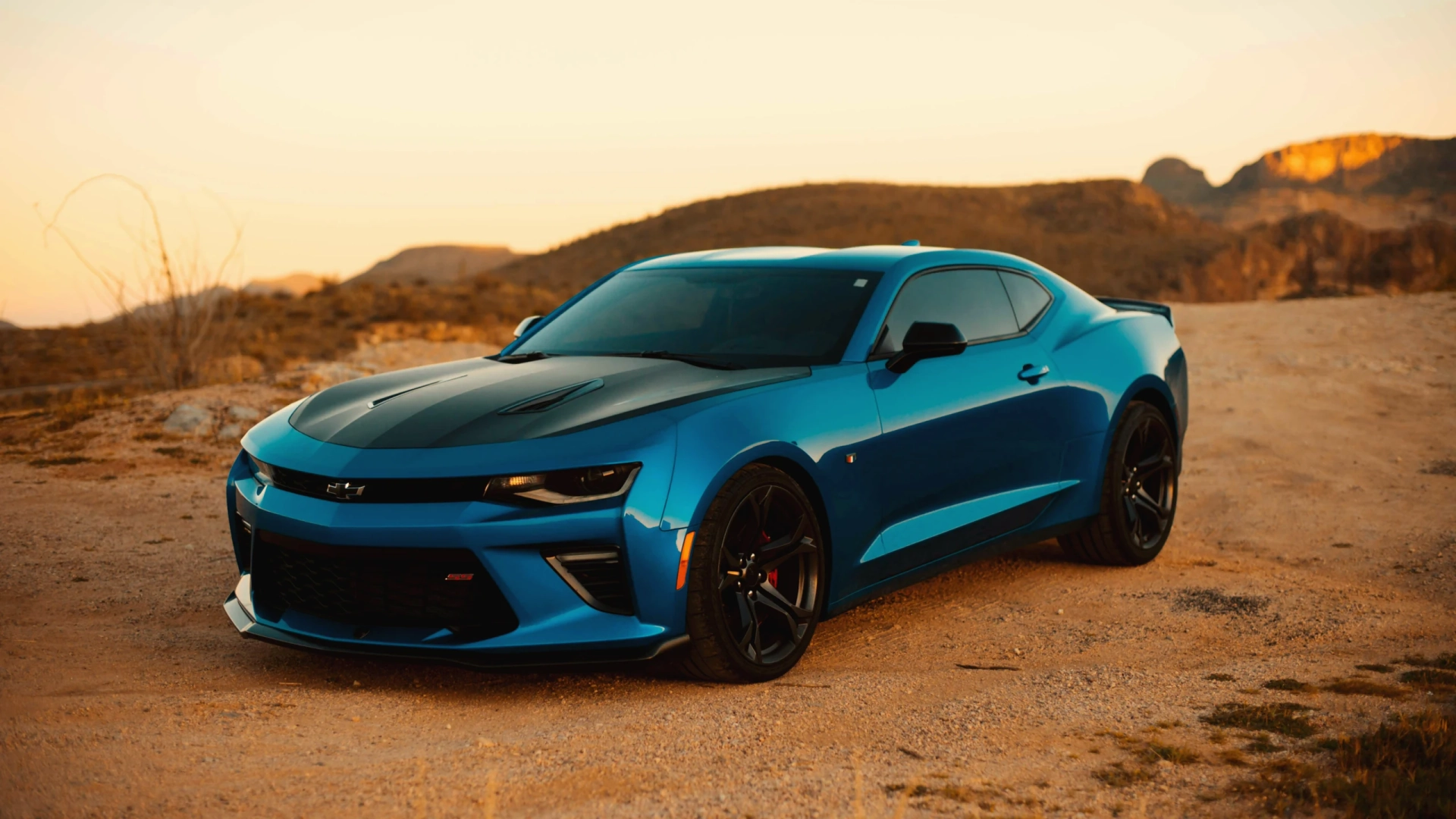
The Lusso’s design is widely considered to be one of Pininfarina’s finest achievements. It features incredibly delicate roof pillars, a spacious greenhouse, and a subtle Kamm tail. The body was constructed primarily of steel, with aluminum used for the doors, hood, and trunk lid.
Power came from the legendary 3.0-liter Colombo V12 engine (Type 168/U), fitted with three Weber carburetors to produce 240 horsepower. Unlike its racing siblings, the Lusso was designed for high-speed continental touring. The interior was trimmed in exquisite leather, with a unique dashboard layout that placed the speedometer and tachometer in the center of the fascia, angled toward the driver.
At RM Sotheby’s Monterey auction in August 2023, a pristine, matching-numbers 1963 Ferrari 250 GT Lusso sold for $2.1 million. While this figure is a fraction of the price of a 250 GTO, the Lusso represents a different kind of collecting. It is a car designed for the road, not the track. It does not possess the aggressive, muscular stance of the SWB or the open-air theater of the California Spider. Instead, it offers a quiet, sophisticated presence that makes it the perfect vehicle for long-distance touring through the Swiss Alps or the rolling hills of Tuscany. It is a car that whispers its pedigree rather than shouting it.
The BMW E30 M3 Sport Evolution: The Homologation Zenith
To the uninitiated, the E30-generation BMW M3 looks like a boxy, three-box sedan from the late 1980s—the sort of car that might have been driven by a junior stockbroker or a regional sales manager. But to the collector of homologation specials, the E30 M3 Sport Evolution (often referred to as the Evolution III) is a holy grail.
Produced between late 1989 and early 1990, the Sport Evolution was the final, most extreme iteration of the E30 M3 built to satisfy Deutsche Tourenwagen Meisterschaft (DTM) racing regulations. BMW produced exactly 600 units, all finished in either Jet Black or Brilliant Red.
The changes from the standard M3 were extensive and highly technical. The engine displacement was increased from 2.3 to 2.5 liters, raising power output to 238 horsepower. The factory fitted a specialized crankshaft, larger valves, and sodium-cooled exhaust valves. To improve aerodynamics, the car featured an adjustable front splitter and a matching adjustable rear wing, both of which could be set to three positions: Monza, Normal, or Nürburgring.
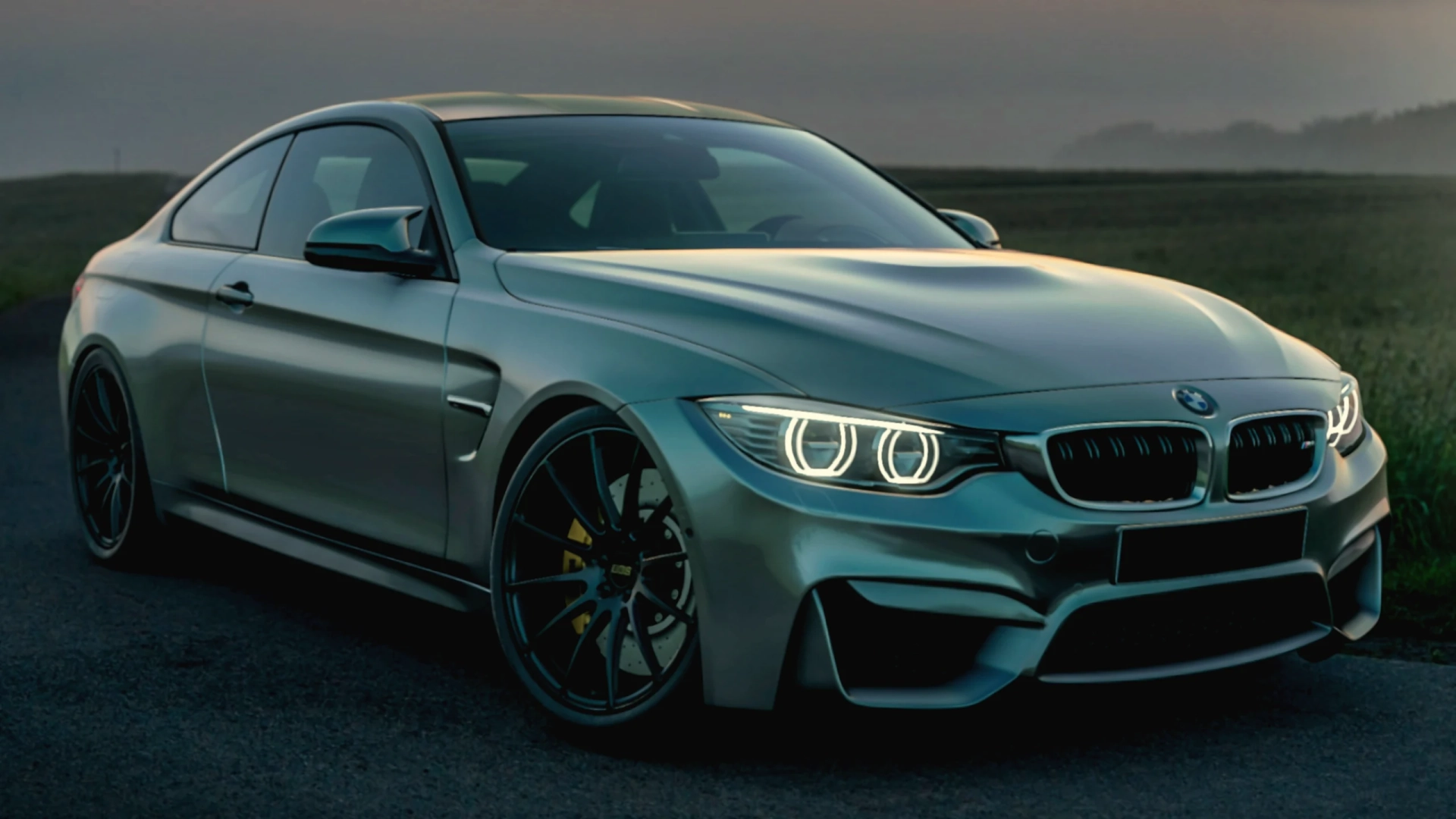
To save weight, BMW fitted thinner glass, a lighter trunk lid, and eliminated the air conditioning, fog lights, and audio system as standard equipment. The front bumper featured cooling ducts for the brakes in place of the standard fog lights.
Today, the market for these cars is highly competitive. While a standard E30 M3 can be acquired for $70,000 to $90,000, a genuine, well-documented Sport Evolution commands between $150,000 and $250,000.
The E30 M3 Sport Evolution is the ultimate sleeper because its performance is entirely functional. Every flare of the fenders, every millimeter of the front splitter, and every modification to the S14 engine was designed for one purpose: to win touring car races. It is a car that delivers an incredibly pure, mechanical driving experience, free from the electronic intervention that defines modern performance cars.
The Mercedes-Benz 300SL Roadster: The Connoisseur's Choice
The Mercedes-Benz 300SL Gullwing is one of the most recognizable automotive designs in history. Its roof-hinged doors and dramatic proportions have made it an icon of mid-century design. Yet, among serious driving enthusiasts and chassis engineers, it is the 300SL Roadster that is considered the superior machine.
Introduced in 1957 as the successor to the Gullwing coupe, the Roadster was not merely a convertible version of the same car. Mercedes-Benz engineers, led by Rudolf Uhlenhaut, took the opportunity to address the Gullwing’s primary dynamic flaw: its swing-axle rear suspension, which was prone to sudden, violent oversteer during hard cornering.
The Roadster featured a redesigned spaceframe chassis with lower sills, allowing for conventional doors. More importantly, it utilized a revised low-pivot swing axle with a compensating spring, which dramatically improved handling predictability and ride comfort.

In 1961, Mercedes-Benz introduced four-wheel Dunlop disc brakes, replacing the fade-prone drum brakes of the earlier cars. Finally, in 1962, the factory began fitting an aluminum-alloy engine block (the M198), which shed 22 kilograms from the front of the car, significantly improving weight distribution and steering response. Only 210 of these late-production, disc-brake, alloy-block Roadsters were ever built.
Current market values for the 300SL Roadster range from $1.2 million for early drum-brake cars to over $2.5 million for the highly coveted disc-brake, alloy-block examples.
While the Gullwing commands a premium in the public eye due to its dramatic doors, the Roadster is the choice of those who actually intend to drive their cars. It is a highly capable, reliable grand tourer that can easily keep pace with modern traffic while offering a level of build quality that has never been surpassed. It is a car that does not need to open its doors to the sky to command respect.
The Macroeconomics of Discretion
The outperformance of understated classic cars is not merely a matter of aesthetic preference; it is driven by clear macroeconomic factors. According to the Knight Frank Luxury Investment Index, classic cars have risen by 82% over a ten-year period, outperforming other passion assets such as fine art, rare whisky, and watches.
Within this asset class, the sub-category of low-production, historically significant GTs and homologation specials has shown the greatest resilience during periods of economic volatility. When interest rates rose in 2023 and 2024, the market for highly speculative, modern hypercars experienced a significant correction. Buyers who had acquired build slots for multi-million-dollar modern exotics found themselves facing steep depreciation as liquidity dried up.
In contrast, the market for cars like the Porsche 964 RS and the Ferrari 250 GT Lusso remained remarkably stable. These cars are held by long-term collectors who do not rely on debt to finance their acquisitions. They are viewed as tangible stores of value—assets with a fixed, finite supply that cannot be diluted by a manufacturer deciding to build another run of "special edition" models.
Furthermore, the demographics of the ultra-high-net-worth individual are shifting. A younger generation of collectors, who have built their wealth in technology, venture capital, and quantitative finance, are entering the market. These buyers are highly analytical. They study production records, chassis registries, and historical race results. They are not interested in the superficial prestige of a modern supercar; they want mechanical authenticity, historical provenance, and a car that requires skill to drive.
This shift is reflected in the data compiled in Adolfo Orsi’s Classic Car Auction Yearbook. The data shows that the sell-through rates for understated, highly original classic cars have remained above 80% at major auctions in Monterey, Paris, and London, even as the overall market volume has contracted. Collectors are willing to pay a premium for cars that have not been modified, over-restored, or exposed to the public eye.
As the sun began to dip below the horizon at Goodwood, casting long shadows across the paddock, the owner of the Guards Red 964 RS returned to his car. He did not use a key fob; he inserted a physical metal key into the door lock, turned it, and climbed over the high bolster of the Recaro bucket seat.
There was no digital startup screen, no customizable driving modes, and no artificial exhaust note pumped through speakers. When he turned the key, the air-cooled 3.6-liter flat-six caught instantly, settling into a busy, mechanical idle that vibrated through the lightweight chassis.
He did not rev the engine to attract attention. He simply engaged first gear on the close-ratio G50 gearbox, released the heavy clutch, and rolled quietly out of the paddock gate, disappearing into the Sussex drizzle. To the hundreds of spectators heading toward the car parks, it was just an old red Porsche. To the few who remained by the paddock wall, it was the most valuable car of the weekend.
Shopygram Exclusive Intelligence
Sleeper Car Appreciation vs High-Visibility Exotic
Index: 2018 = 100 · Discreet Performance Assets
Intelligence Source: Bring a Trailer / Sotheby's Transaction Data
The Curator's Selection
CarsShopygram may receive a referral fee when you transact through these links. Our editorial recommendations are independent of commercial relationships.
The Intelligence Behind the Destination
What is a sleeper car in the context of luxury collecting?
In serious collector circles, a sleeper is a car whose value, rarity, and mechanical significance are invisible to the uninitiated. The Lancia Stratos, Porsche 904, and certain Aston Martin DB4 configurations appear unremarkable to the casual observer but command six and seven-figure prices among those who understand their significance.
Why are wealthy collectors moving away from obvious luxury cars?
Conspicuous consumption has become associated with new money in collector culture. The most sophisticated buyers prefer cars whose value requires knowledge to recognise — a signal of connoisseurship rather than purchasing power. A Porsche 964 RS is worth more than a Lamborghini Aventador and requires far more expertise to appreciate.
Which understated cars are appreciating most significantly in 2026?
Based on Hagerty and RM Sotheby's data: the Porsche 964 Carrera RS, Mercedes-Benz 300SL Roadster, Lancia Stratos, Ferrari 250 GT Lusso, and Aston Martin DB4 Zagato are the five most consistent appreciating sleeper platforms. Each has significant motorsport or engineering heritage invisible to the casual market.
What is the difference between a sleeper car and a barn find?
A barn find is a neglected car discovered after years of storage — value comes from condition potential and provenance. A sleeper is a car in full, often excellent condition whose rarity and significance are simply unknown to the broader market. The sleeper is chosen deliberately; the barn find is discovered by accident.
How do I start collecting sleeper cars with a $500,000 budget?
At $500,000, the most intelligent entry points in 2026 are: an original-specification Porsche 964 RS America ($180,000–280,000), a Ferrari 330 GT ($200,000–350,000), or a low-production Mercedes-Benz 450 SEL 6.9 ($60,000–90,000). The 964 RS offers the best combination of usability, provenance, and appreciation trajectory.
The Author
Travis Wiedower
Senior Contributing Editor — Luxury Capital & Alternative AssetsTravis Wiedower is a veteran editorial voice across luxury's most considered verticals — from horology and haute automotive to prime real estate and private travel. With over 15 years at the helm of prestige publications, he reports on the intersection of global wealth, cultural taste, and the architecture of considered living.