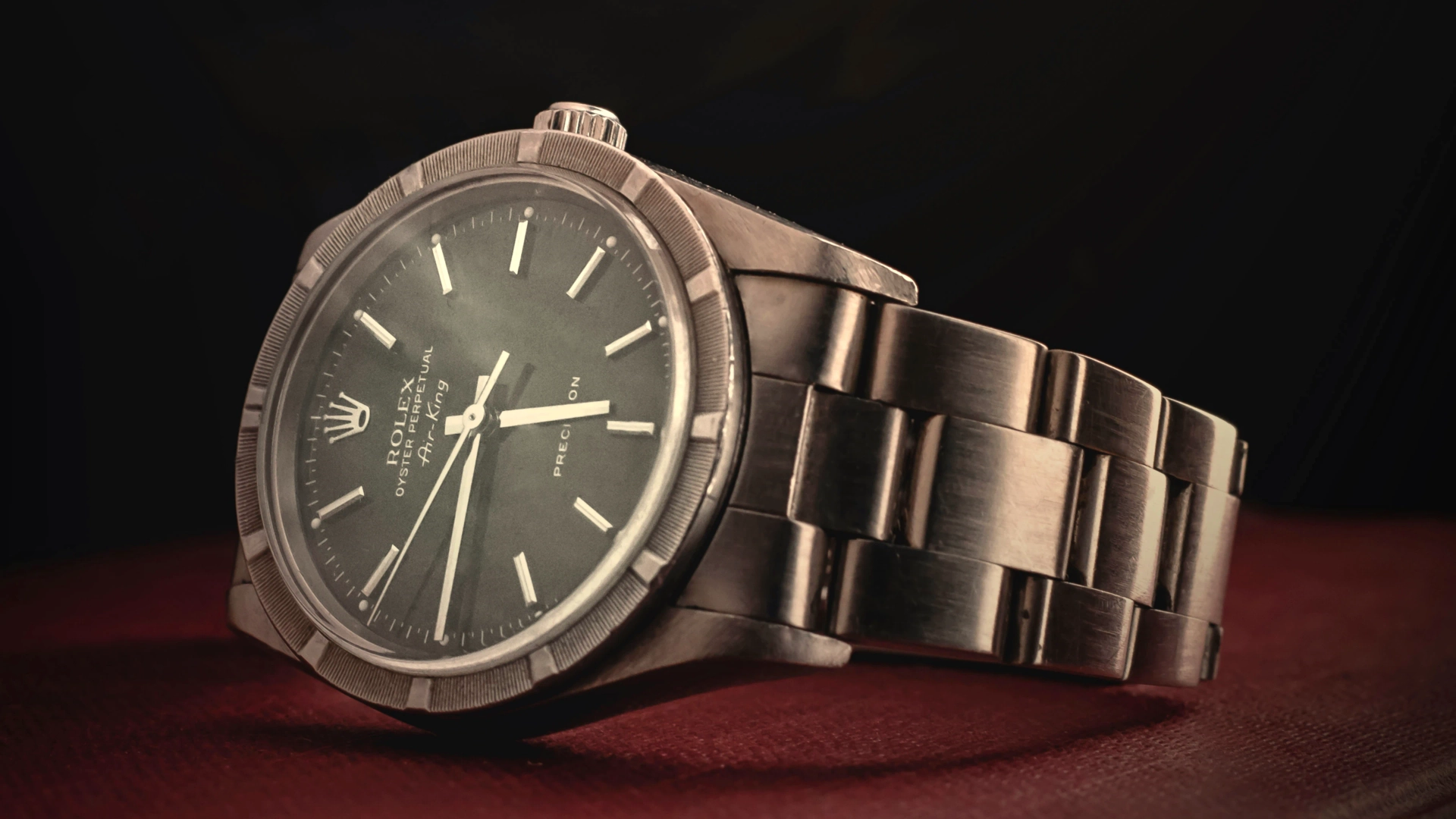
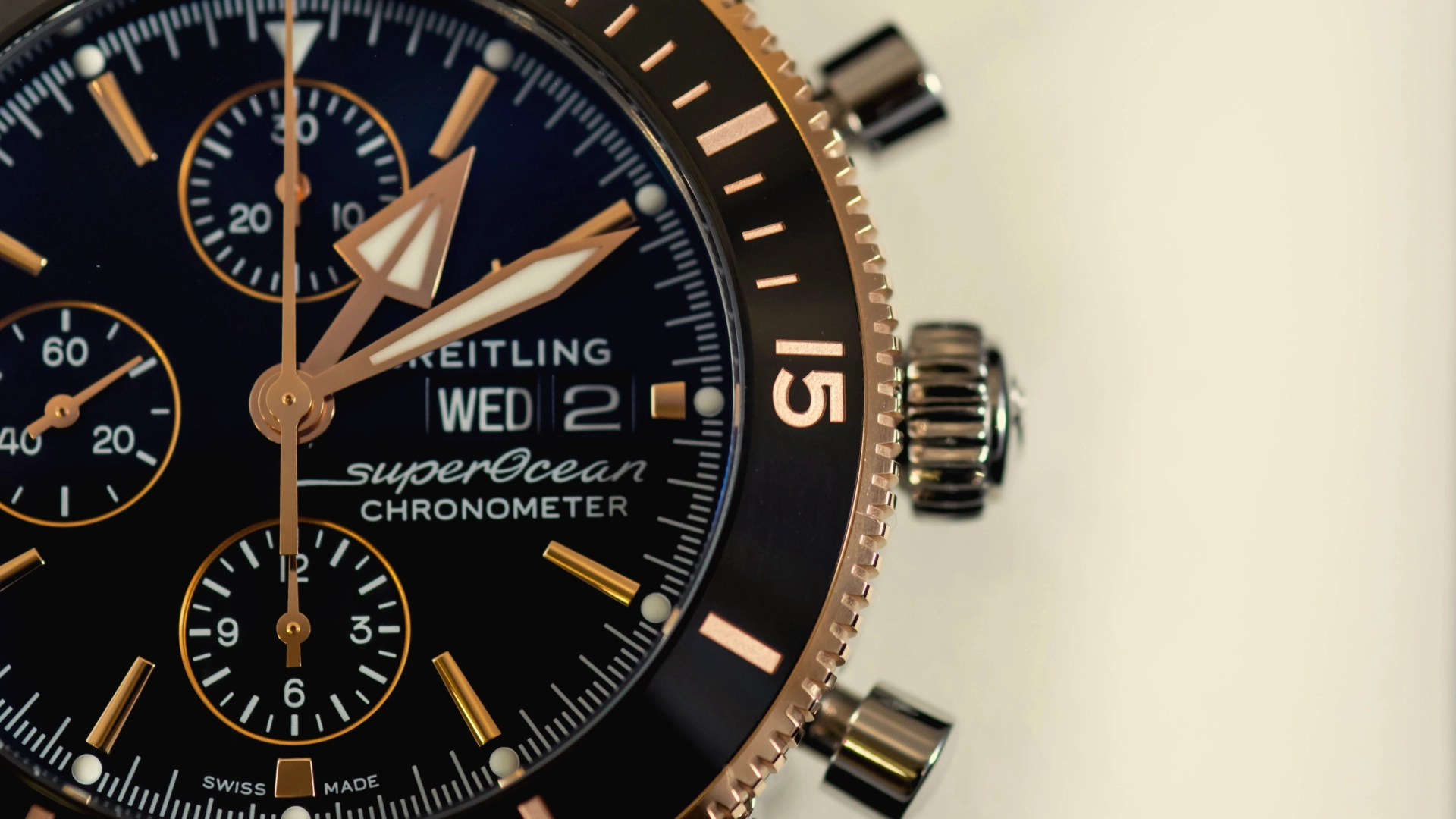
Watches
The Purposeless Complication: Why the Tourbillon’s Functional Irrelevance Dictates Its Horological Premium
Invented in 1801 to correct pocket watch gravity, the tourbillon corrects nothing on a modern wrist. A defense of ornamental engineering, and why functional irrelevance is the ultimate marker of haute horlogerie.
The Purposeless Complication: Why the Tourbillon’s Functional Irrelevance Dictates Its Horological Premium
The Architecture of Irrelevance
On 26 June 1801, the French Minister of the Interior granted Abraham-Louis Breguet a ten-year patent for a mechanism he termed the "tourbillon"—French for whirlwind. Patent number 157 described a device intended to solve a problem that plagued the horology of the Napoleonic era: the inconsistency of timekeeping in pocket watches. Because these timepieces were typically carried vertically in a waistcoat pocket, gravity exerted a constant, uneven pull on the balance wheel, hairspring, and lever. Breguet’s solution was to house the entire escapement and balance assembly within a rotating cage, typically completing one revolution every sixty seconds. By forcing the mechanism to rotate, the errors induced by gravity were averaged out over the course of a minute, theoretically resulting in a more precise rate.
The engineering required to achieve this is staggering. A standard tourbillon cage consists of between 72 and 100 individual components, yet the entire assembly must weigh less than 0.3 grams to avoid exhausting the mainspring’s power reserve. According to the 2024 Federation of the Swiss Watch Industry (FH) report, the production of such a mechanism requires a master watchmaker to undergo a minimum of seven years of specialized training, often followed by a decade of bench experience before they are permitted to assemble a tourbillon independently. The labor cost alone is significant, as a single tourbillon movement often demands between 400 and 600 hours of meticulous assembly, adjustment, and finishing.
In the contemporary market, the tourbillon has transitioned from a functional necessity to a symbol of horological prowess. Entry-level tourbillons from established maisons now command a starting price of approximately CHF 80,000, while high-complication models frequently trade between CHF 500,000 and CHF 1.5 million. This price point is not a reflection of utility, but rather a valuation of the human hours invested in the creation of a mechanism that, by the laws of modern physics, serves no practical purpose for the wearer. The tourbillon exists in a state of perpetual, expensive motion, performing a task that the modern wristwatch—worn on a wrist that moves constantly throughout the day—has already rendered obsolete.

The Physics of the Paradox
The fundamental irony of the tourbillon is that it was designed for a static environment. When a pocket watch remains in a vertical position, the tourbillon cage effectively cancels out positional errors. However, the modern wristwatch is subjected to the erratic, multi-axial movements of the human arm. As the wearer walks, gestures, or reaches for a glass of water, the watch is constantly changing orientation. This constant movement negates the very gravitational error the tourbillon was engineered to correct. In a wristwatch, the tourbillon is a solution to a problem that no longer exists, yet it remains the most coveted complication in the industry.
Data from the Knight Frank 2025 Prime Global Cities Index suggests that the appetite for such "useless" complexity is growing among ultra-high-net-worth individuals, who increasingly view mechanical watches as portable kinetic art rather than time-telling tools. The tourbillon is the ultimate expression of this shift. It is a mechanism that demands attention, drawing the eye to the dial where the cage spins in its hypnotic, rhythmic dance. It is a display of mechanical theater, a performance of precision that serves no functional end, yet commands a premium that dwarfs the cost of more accurate, quartz-regulated timepieces.
The paradox is further deepened by the sheer fragility of these systems. Because the cage must be incredibly light to function, the components are often made from exotic, difficult-to-machine materials like titanium or aluminum alloys. A slight misalignment in the cage can lead to catastrophic failure, requiring the watch to be returned to the manufacturer for a service that can cost upwards of CHF 5,000. Despite this, the demand for tourbillons remains robust. Collectors are not buying accuracy; they are buying the defiance of utility. They are purchasing the privilege of owning a machine that works harder than it needs to, simply because it can.

The Mastery of the Breguet Classique Tourbillon 5367
To understand the aesthetic and technical pinnacle of this complication, one must look at the Breguet Classique Tourbillon 5367. This timepiece strips away the unnecessary, presenting the tourbillon in its most refined form. The watch features an off-center dial, allowing the tourbillon cage to occupy the space at five o'clock. It is a masterclass in restraint, eschewing the cluttered dials of lesser complications in favor of a clean, grand feu enamel face. The movement is remarkably thin, measuring just 3mm in thickness, a feat achieved by using a peripheral rotor to wind the watch, thereby avoiding the need for a central rotor that would obscure the view of the movement.
The 5367 is not merely a watch; it is a continuation of the lineage established by Abraham-Louis Breguet himself. According to the archives of the Breguet Museum in Paris, the company produces fewer than 500 tourbillon-equipped watches per year, ensuring that each piece remains a rarity. The price, hovering around CHF 150,000, reflects the scarcity of the craftsmanship involved. Every bridge is hand-beveled, every screw head is polished to a mirror finish, and the tourbillon cage itself is balanced to a degree of precision that borders on the obsessive.
When one examines the 5367 under a jeweler’s loupe, the sensory experience is profound. The light catches the chamfered edges of the cage, revealing the hours of labor spent by a single artisan. There is no digital readout, no satellite-linked precision, and no practical advantage over a standard escapement. Yet, the presence of the tourbillon provides a sense of mechanical life. It is a heartbeat on the wrist, a constant reminder that in an era of mass-produced silicon chips, there is still a place for the slow, deliberate, and entirely unnecessary application of human skill.

The Architectural Complexity of Greubel Forsey
If the Breguet 5367 represents the classical approach to the tourbillon, the work of Greubel Forsey represents the radical, architectural expansion of the concept. Robert Greubel and Stephen Forsey founded their atelier in 2004 with the explicit goal of inventing new ways to solve the gravitational problem, even if that problem had already been solved by the tourbillon. Their Double Tourbillon 30° is a proof of this philosophy. It features a tourbillon cage inclined at a 30-degree angle, which is itself housed within a second, rotating cage. This configuration is designed to ensure that the balance wheel is never in a single position for long, further minimizing the influence of gravity.
The complexity of the Greubel Forsey approach is reflected in their production numbers and pricing. With an annual output of fewer than 100 timepieces, the brand occupies a rarefied tier of the market. Their watches frequently retail for upwards of CHF 500,000, and secondary market prices for rare models have been known to exceed CHF 1 million at auction houses like Phillips or Christie’s. According to a 2024 analysis by Deloitte on the luxury watch market, Greubel Forsey represents the "ultra-high-complication" segment, where the value is derived not from brand recognition, but from the sheer audacity of the engineering.
The Double Tourbillon 30° is a sprawling, three-dimensional landscape of gears, bridges, and cages. It is the antithesis of the minimalist 5367. Where Breguet seeks to hide the complexity behind a veil of elegance, Greubel Forsey exposes it, turning the movement into a miniature city of interlocking parts. The sensory impact is overwhelming; the watch is heavy, dense, and visually demanding. It is a machine that refuses to be ignored, a physical manifestation of the idea that the most valuable objects are those that push the boundaries of what is possible, regardless of whether that possibility is required.
The Purist’s Choice: F.P. Journe
François-Paul Journe, the independent watchmaker based in Geneva, offers a different perspective on the tourbillon. His Tourbillon Souverain is widely regarded as one of the most significant watches of the modern era. Journe reintroduced the *remontoir d’égalité*—a constant-force device—to the tourbillon, ensuring that the energy delivered to the escapement remains constant regardless of the state of the mainspring. This is a functional addition to a non-functional complication, a layer of complexity that serves to stabilize the rate of a mechanism that is already, by definition, a luxury.
The Tourbillon Souverain is a study in balance and proportion. Journe’s use of 18k rose gold for the movement plates and bridges is a signature aesthetic choice that distinguishes his work from the rhodium-plated movements of the larger conglomerates. According to the 2024 report by the Fondation de la Haute Horlogerie, F.P. Journe watches are among the most sought-after by collectors, with waitlists for new models often extending beyond five years. The price for a Tourbillon Souverain can easily exceed CHF 300,000, a figure that is justified by the scarcity of Journe’s production and the singular vision of the man himself.
To wear a Journe is to participate in a dialogue with the history of horology. The watch does not shout; it speaks in the quiet, precise language of a master who has spent his life refining the mechanics of time. The tourbillon cage in the Souverain is more than a rotating assembly; it is a component of a larger, integrated system that includes the constant-force device. It is a watch that rewards the wearer for paying attention, for noticing the subtle differences in the way the seconds hand moves, and for appreciating the sheer, unadulterated commitment to craft that defines the F.P. Journe brand.

The Philosophy of the Useless
The enduring appeal of the tourbillon lies in its status as a "purposeless complication." In a world that increasingly prizes efficiency, speed, and digital integration, the tourbillon stands as a defiant monument to the slow and the unnecessary. It is a mechanism that requires hundreds of hours of human labor to perform a task that a battery-powered quartz movement can do with greater accuracy for less than one-thousandth of the price. This is not a failure of the tourbillon; it is its greatest strength. The value of the tourbillon is found in the very fact that it is not needed.
This philosophy aligns with the broader trends in luxury consumption identified by the 2025 Bain & Company Luxury Goods Worldwide Market Study, which notes that consumers are shifting away from "conspicuous consumption" toward "connoisseurship." The connoisseur does not buy a tourbillon to tell the time; they buy it to possess a piece of mechanical history, to support the continuation of a dying art, and to experience the tactile pleasure of a machine that has been built by hand. The tourbillon is a luxury in the truest sense: it is an object that provides no utility beyond the aesthetic and intellectual satisfaction of its existence.
When we consider the most valuable objects in human history—the illuminated manuscript, the hand-carved sculpture, the bespoke suit—we find that they all share this quality of purposelessness. They are objects that exist because someone decided that the world would be a poorer place without them. The tourbillon belongs in this category. It is a mechanical poem, a sequence of gears and springs that tells a story of human ingenuity and the desire to transcend the limitations of the physical world. It is a reminder that the most significant things in life are often those that serve no practical purpose at all.
The Quietude of the Bench
In the quiet, climate-controlled workshop of a master watchmaker in Le Sentier, the air is thick with the scent of synthetic oil and the faint, metallic tang of brass. A single lamp illuminates the workbench, casting long shadows across the scattered components of a tourbillon cage. The watchmaker, a man whose hands have been trained for thirty years to manipulate parts smaller than a grain of sand, picks up a pair of tweezers. He is currently working on the balance spring, a hair-thin coil of Nivarox that must be perfectly centered within the cage. The silence is absolute, broken only by the occasional, rhythmic ticking of a nearby test clock.
He places the cage into the movement, his movements slow and deliberate. He does not rush; he knows that a single slip of the tweezers could ruin weeks of work. He checks the alignment, adjusts the tension of the cage, and then, with a steady hand, secures the final bridge. He winds the crown, and for the first time, the tourbillon begins to rotate. It is a small, silver whirlwind, spinning with a grace that seems almost organic. He watches it for a moment, his eyes tracking the movement of the cage, the way the light catches the polished steel of the bridge, the way the entire assembly seems to breathe.
He does not check the time. He does not compare the watch to a reference clock. He simply sits back, the loupe still pressed to his eye, and observes the machine he has brought to life. Outside the window, the snow falls silently over the Jura Mountains, a landscape that has been the home of watchmaking for centuries. The watchmaker sighs, a small, satisfied sound, and reaches for his notebook to record the final adjustments. The tourbillon continues to spin, a tiny, perfect, and entirely useless heart beating in the dark, indifferent to the world outside.
Shopygram Exclusive Intelligence
Tourbillon Secondary Value — Brand Correlation
Index: 2018 = 100 · Tier 1 Independent vs Group Brand
Intelligence Source: Phillips / Christie's Auction Data
The Curator's Selection
WatchesShopygram may receive a referral fee when you transact through these links. Our editorial recommendations are independent of commercial relationships.
The Intelligence Behind the Destination
What was the original purpose of the tourbillon?
Invented in 1801 by Abraham-Louis Breguet, the tourbillon was meant to improve the accuracy of pocket watches. Because pocket watches were typically kept in a vertical position (in a waistcoat), gravity would pull on the escapement unequally. The tourbillon rotated the entire escapement to "average out" these errors.
Does a tourbillon actually make a modern wristwatch more accurate?
Mathematically, no. In a wristwatch, the constant movement of the wearer's wrist already performs the "averaging" function Breguet intended for the tourbillon. Modern materials and lubricants have further reduced the need for such mechanical compensation, making the tourbillon an engineering marvel rather than a functional necessity.
If it is useless, why are tourbillon watches so expensive?
The expense lies in the complexity of manufacture and the prestige of "haute horlogerie." A tourbillon cage can consist of over 70 microscopic parts weighing less than a gram. Hand-finishing these components to a museum standard requires hundreds of hours of elite craftsmanship, making it a "flex" of technical capability.
Should a collector still value a tourbillon watch?
Yes, but for its artistic and historical significance rather than its timekeeping. A tourbillon represents the pinnacle of traditional mechanical engineering. It is the "ballet" of the watch world—a visually stunning demonstration of human skill and precision that transcends pure utility in favor of mechanical beauty.
The Author
Travis Wiedower
Senior Contributing Editor — Luxury Capital & Alternative AssetsTravis Wiedower is a veteran editorial voice across luxury's most considered verticals — from horology and haute automotive to prime real estate and private travel. With over 15 years at the helm of prestige publications, he reports on the intersection of global wealth, cultural taste, and the architecture of considered living.